10 years on, David Bowie shows us how to move forward – even when confronting the end
Jonathan Stiasny, director of new documentary Bowie: The Final Act, on telling the powerful story of the legendary musican's final chapter
by: Jonathan Stiasny
10 Jan 2026
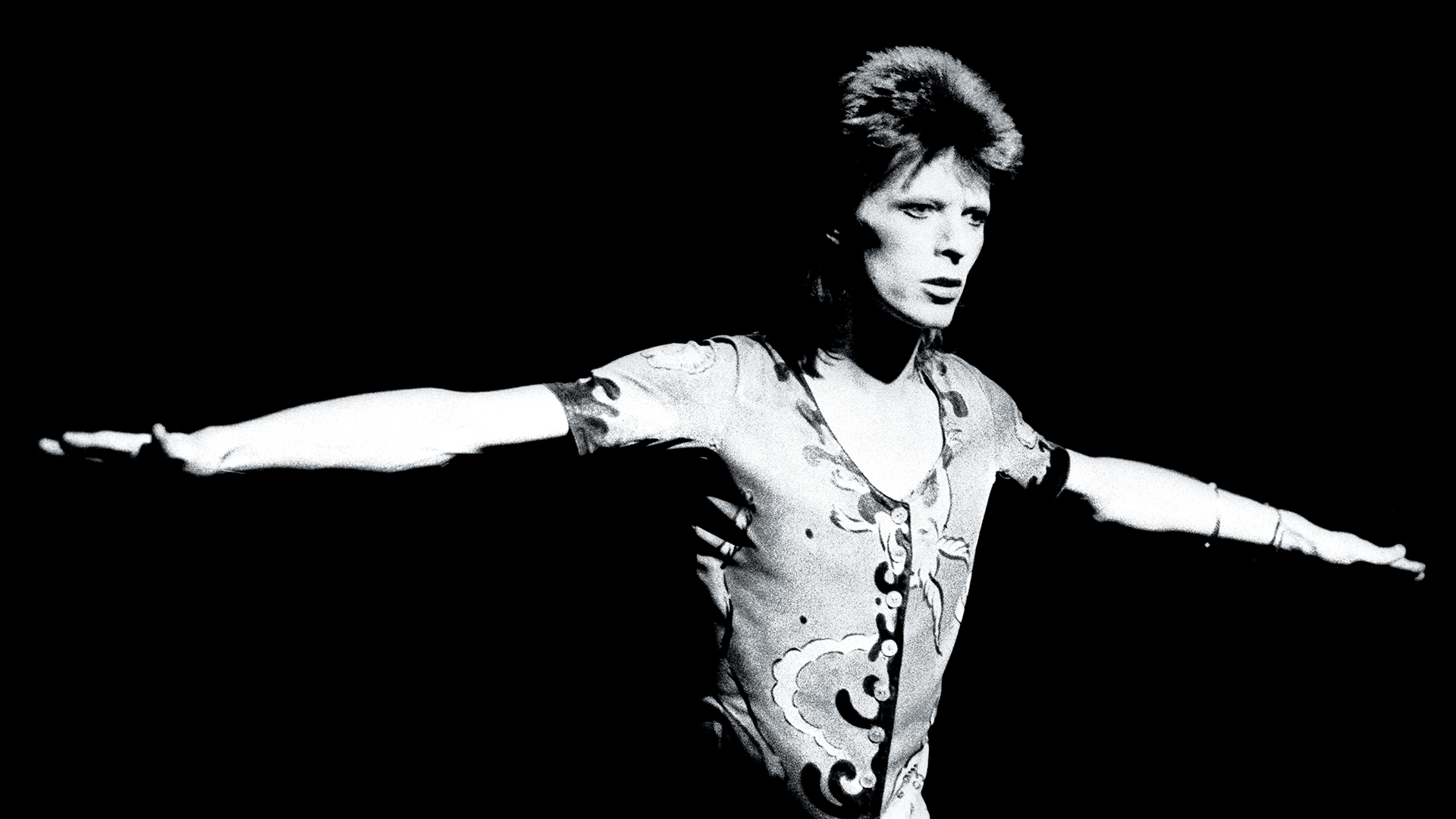
Bowie performing at Leeds Rolarena in 1973, for his Ziggy Stardust Tour. Image: Kevin Cummins
Share
As a child of 1980s Britain, David Bowie was always there. An orbiting force of style, sound and strangeness who shaped the culture I absorbed long before I understood it. I am a fan of his music and was a teenager in the crowd at his barnstorming performance at Glastonbury 2000; but being asked to direct a film about his work opened a door to a Bowie I had never really known.
What I learned from the people who knew him well – colleagues, friends and collaborators – has shaped every frame of my forthcoming documentary feature Bowie: The Final Act. And it is that understanding that I have tried to honour in telling the powerful story of his final creative chapter.
Ten years ago, on 8 January 2016, Bowie released his final studio album Blackstar. A haunting, transformative work, characteristically loaded with creative risk and reinvention. Just two days later, the world was stunned by the shock announcement of Bowie’s death from cancer and the attendant realisation that Blackstar was the end.
The final masterpiece from the great chameleon became a self-penned requiem, quite unique in music history – excepting perhaps Mozart’s. To celebrate the anniversary of the release of this astonishing work, Bowie: The Final Act revisits the incredible legacy of one of music’s few true icons.
Bowie’s glittering career was without a perfect trajectory. Understanding its ebbs and flows was crucial to the telling of this story. The deeper we delved into the less examined aspects of his oeuvre – especially his works of the 1990s – the more surprising and interesting the story became.
Advertising helps fund Big Issue’s mission to end poverty
Advertising helps fund Big Issue’s mission to end poverty
By the end of the 1980s, Bowie’s creativity and the near perfect 10-year period of musical output beginning with Hunky Dory in 1971 and ending with Scary Monsters in 1980 had faltered. He had – in the words of Reeves Gabrels, his bandmate, guitarist and co-writer in the 90s – “run out of gas” from a creative perspective.
After the release of three successive pop albums, he was being lumped in with the Phil Collins brigade. The innovative creator of glam rock and cultural inspiration for 1980s British cool was starting to look like yesterday’s man. Gabrels told me he had “lost a feeling for who his audience was”.
This is not unusual – there are few mega-stars that can ride the shifting sands of fame for decades without succumbing at times to the predictable and derivative. But creative struggle is an unfamiliar lens through which to examine a legend’s work; both a fascinating and a revealing one.
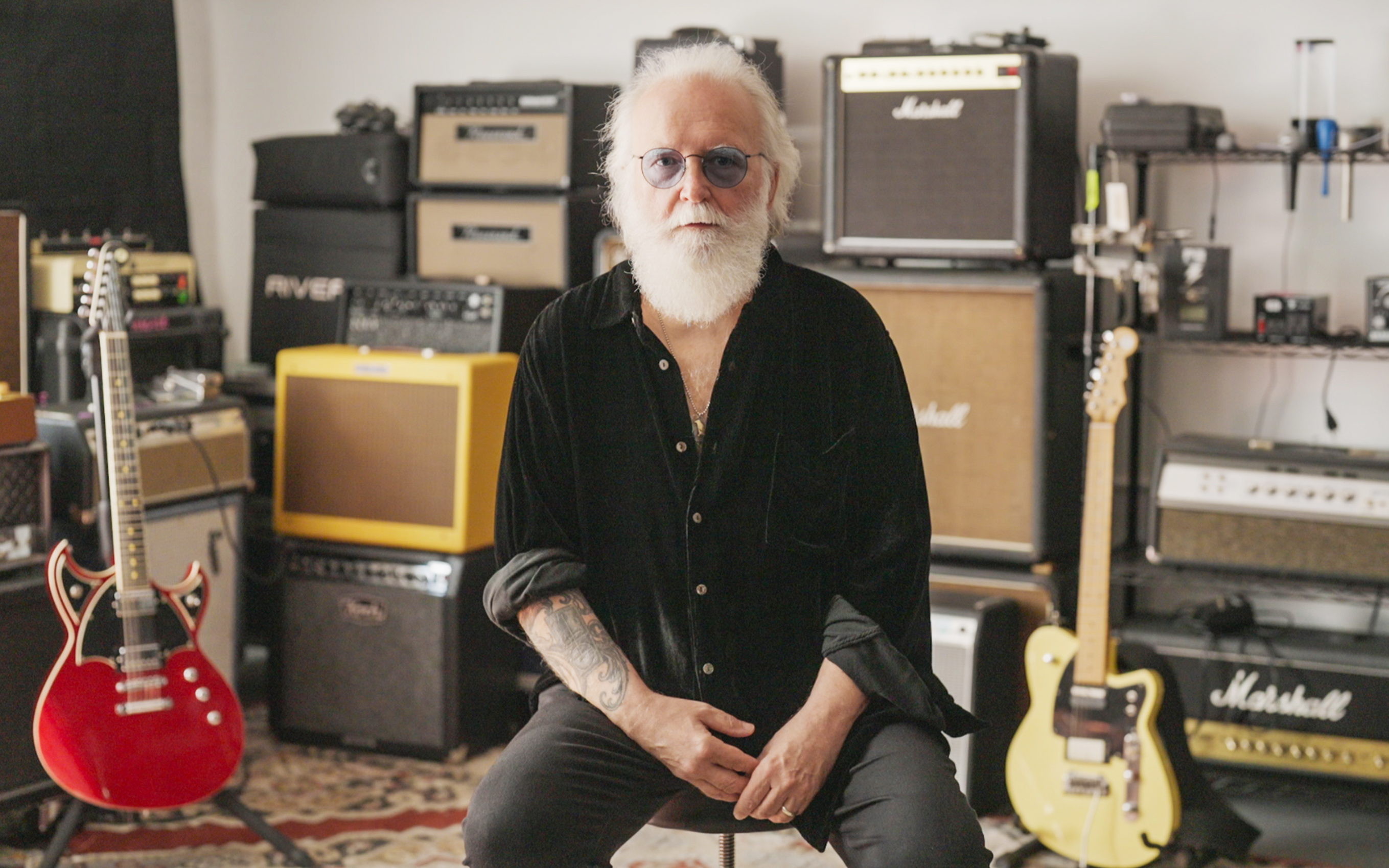
Reeves Gabrels. Image: Rogan Productions
In 1989, Bowie resolved to start a garage rock band Tin Machine with his friend Gabrels and the Sales brothers of Iggy Pop fame. He was now just a bloke in a band – a breathtaking move for a star who had been filling stadiums around the world for the best part of a decade. This turning point in his artistic journey provided us with the ideal beginning for the film, which attempts to understand something about art, death and the mysterious power of creativity.
Bowie’s work in the 90s was prolific, remarkably varied and yet split critical opinion. The garage rock of Tin Machine, lower-profile side projects like The Buddha of Suburbia, (born from a soundtrack made with friend and writer Hanif Kureishi, who also appears in the film), the industrial experimentalism and re-engagement with art rock that came with Outside.
An interest in rave culture and drum and bass that expressed itself in collaborations and in his 1997 album Earthling. In hindsight, all of these look like incredible works of creative bravery from an artist constantly experimenting with different ways to express himself. Understanding this time is essential to understanding Bowie’s final act. As Gabrels told me, “No 90s, no Blackstar.”
Advertising helps fund Big Issue’s mission to end poverty
By the turn of the millennium, Bowie was in his 50s and his cultural relevance was less obvious than once it had been. But in June 2000, I and a quarter of a million revellers were at Glastonbury Festival to see the Starman reclaim his crown at the pinnacle of British music. Bowie regaled us with hit after hit in a retrospective tour de force. A classic reminder of his songwriting genius which cemented his legacy as the best headliner in the festival’s history. And so began his final act.
The 2000s were different. After Glastonbury, Bowie seemed more at ease with his back catalogue. A rapprochement with producer Tony Visconti birthed two well-received albums and lengthy tours. Earl Slick, a central casting rock star and longtime Bowie guitarist describes the Reality tour as “the best band we ever had, the best performances we ever did. It kicked ass.”
But ill health and a new family meant that in 2004, Bowie bowed out of the limelight for almost 10 years. His longest period of musical silence was thought by some to be the end.
“Everyone claimed that he was finished, he was never going to make another record again,” Visconti told me. But by January 2013 Bowie delighted his fans with the surprise release of the beautiful, fragile song “Where Are We Now?” from the secretly recorded album The Next Day.
Three years later, Blackstar, recorded with jazz virtuosos the Donny McCaslin Band and produced by Visconti, would be his parting gift to the world. A peerless meditation on mortality and a shining example of artistic and human courage in the face of death, Blackstar would be the final transformation for Bowie; a pitch – intentionally or otherwise – at immortality which will be explored by generations to come. The sculpting of an ending, of death into art.
Advertising helps fund Big Issue’s mission to end poverty
It is a great privilege to explore Bowie’s creative output in documentary form and to be trusted with intimate memories of key moments in the life of an icon. In Bowie, many found an example of how to live – how to find connection as outsiders. And now, a decade after his death, Bowie remains the artist who shows us how to move forward, even when confronting the end. His final act may be his most generous: a roadmap for creativity, courage and reinvention in a world that needs all three.
Jonathan Stiasny is director of Bowie: The Final Act, in cinemas now and available to watch online through Channel 4.
Buy from your local Big Issue vendor every week – and always take the magazine. It’s how vendors earn with dignity and how we fund our work to end poverty.