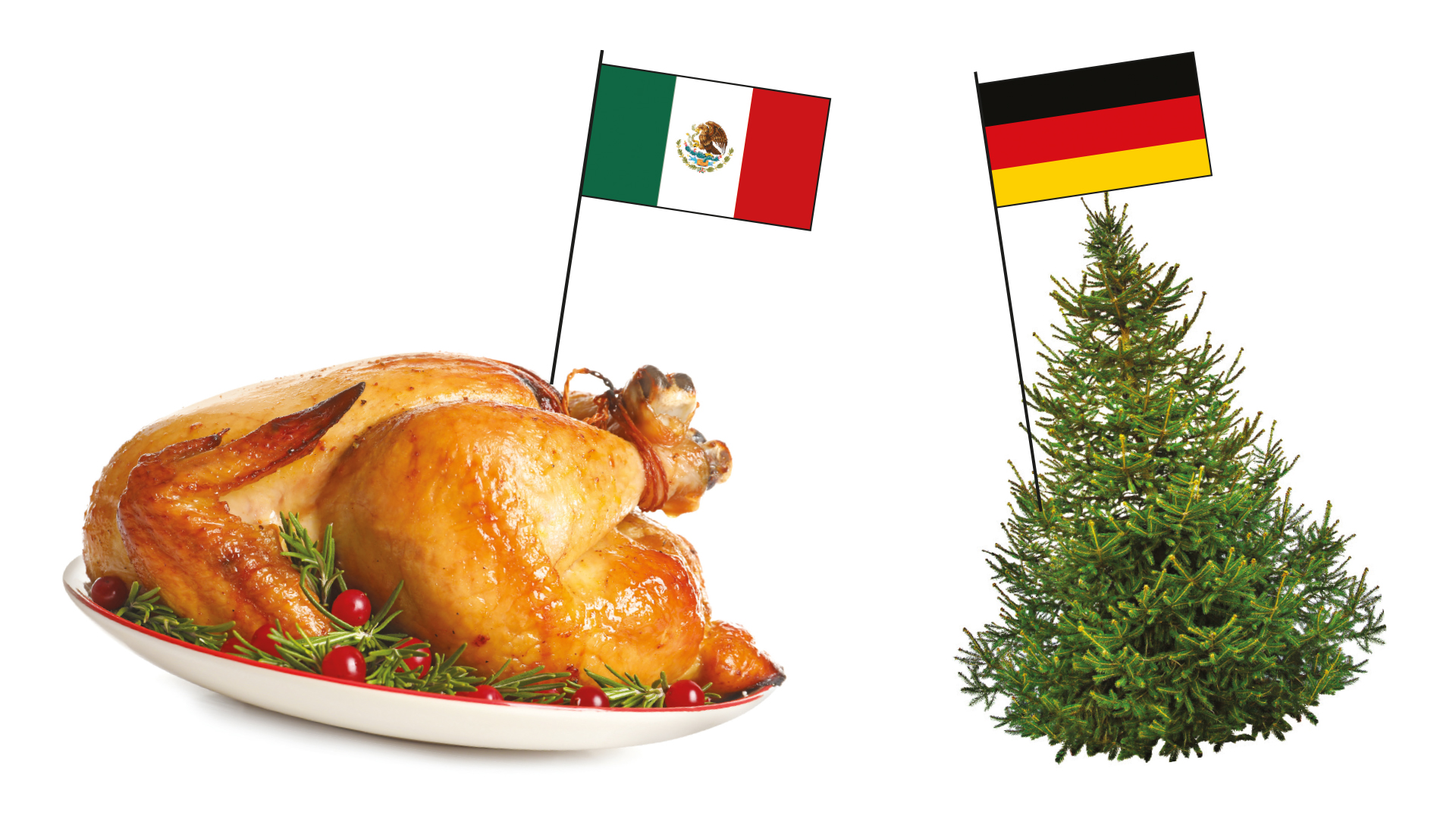
Turkeys come from Mexico and Christmas trees from Germany. Who knew? Image: New Africa / My Sunnyday / Shutterstock
Share
Our warm, fuzzy feeling of safety is an illusion. Some of our best-loved British traditions, those rituals we consider to be the thread and fabric of our national identity, are not British at all. We’ve delved into the origins of our beloved rituals – from crackers and trees to speeches and turkeys.
But it is not mere information for information’s sake. At Big Issue, we are committed to journalism you can actually put to use in your life. Hopefully these facts can ward off a genuinely British tradition: the Christmas Day row.
When the Tudor poet Thomas Tusser wrote of “Turkey wel drest” as part of a Christmas feast in 1573, he was in fact taking part in a trend new to these shores. Turkeys, those red-necked birds who gobble and are gobbled, were brought to Europe by Spaniards returning from the conquest of Mexico in the early 16th century. The birds settled well into the English landscape, giving rise to the Norfolk Black variety.
By Victorian times turkey had become more ubiquitous, though a prohibitive cost meant goose was often more popular. Queen Victoria described a “regular Christmas dinner, with turkeys, Baron of Beef, Plum Pudding & Mince Pies” in her diary entry for Christmas Day 1843. She was also a fan of roast swan. For those outside palaces, even buying a goose was a stretch – local “goose clubs” got going early in the year, allowing workers to put money away each month to afford the bird.
As the 1930s came around, the turkey’s road to domination was complete as it became the most popular choice for Christmas dinner – showing early on there was a British market for Mexican cuisine without the need for the words “Old El Paso”.
Advertising helps fund Big Issue’s mission to end poverty
Advertising helps fund Big Issue’s mission to end poverty
Christmas trees: German
Like many often credited as innovators, when it comes to Prince Albert and Christmas trees, he wasn’t actually the one who had the initial brainwave – though the tradition still has German roots.
Christmas has always been a time of greenery in the home. One 1444 account described homes decked with “whatever the season of the year afforded to be green,” while Deck the Halls dates back to 16th-century Wales as a hymn.
Yet despite enamouring his wife with the tradition – on Christmas Eve 1841, Queen Victoria wrote in her diary of “the very smell of the Christmas Trees of pleasant memories” – it was one of Albert’s predecessors as consort who got it all going.
These days she might be more known as a character in Bridgerton, but as far back as 1800, George III’s German wife Charlotte set up the first known Christmas tree at Windsor’s Queen’s Lodge. The occasion was a Christmas party for poor children.
“In the middle of the room stood an immense tub with a yew tree placed in it, from the branches of which hung bunches of sweetmeats, almonds and raisins in papers, fruits and toys most tastefully arranged and the whole illuminated by small wax candles,” wrote one attendee.
Advertising helps fund Big Issue’s mission to end poverty
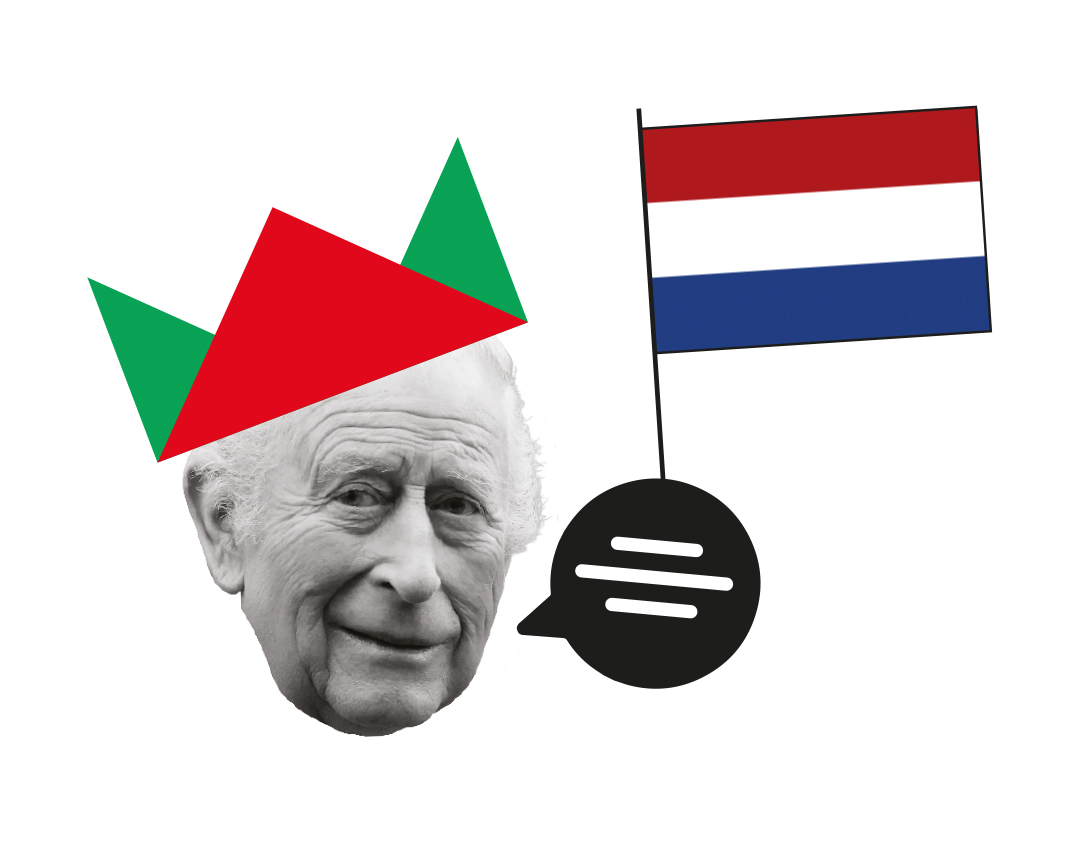
The King’s Speech: Dutch
Image: Alessia Pierdomenico / Shutterstock
What could have been more British? On Christmas Day 1932, families across the nation gathered around the wireless at 3pm. Speaking to them from Sandringham was their monarch, George V, reading words penned by Rudyard Kipling.
Prefiguring some mid-period Oasis lyrics, George’s voice came through the speakers: “Through one of the marvels of modern science, I am enabled, this Christmas Day, to speak to all my peoples throughout the Empire.”
At two-and-a-half minutes, it could have been played in full twice in the time it took Liam Gallagher, over 60 years later, to ask all his people if they know what he means. Yet the Dutch had beat George to it by a year.
In 1931, Queen Wilhemina gave an address which was also broadcast the 10,000 miles to the Dutch East Indies – now known as Indonesia – and scheduled for the afternoon to avoid the Sabbath.
“The Queen exhorted all those suffering under the worldwide distress to seek strength in religion,” The New York Times reported.
It was in fact royal reticence which stopped the Brits getting there first. BBC chairman John Reith had pitched the idea in 1922, but George declined.
Advertising helps fund Big Issue’s mission to end poverty
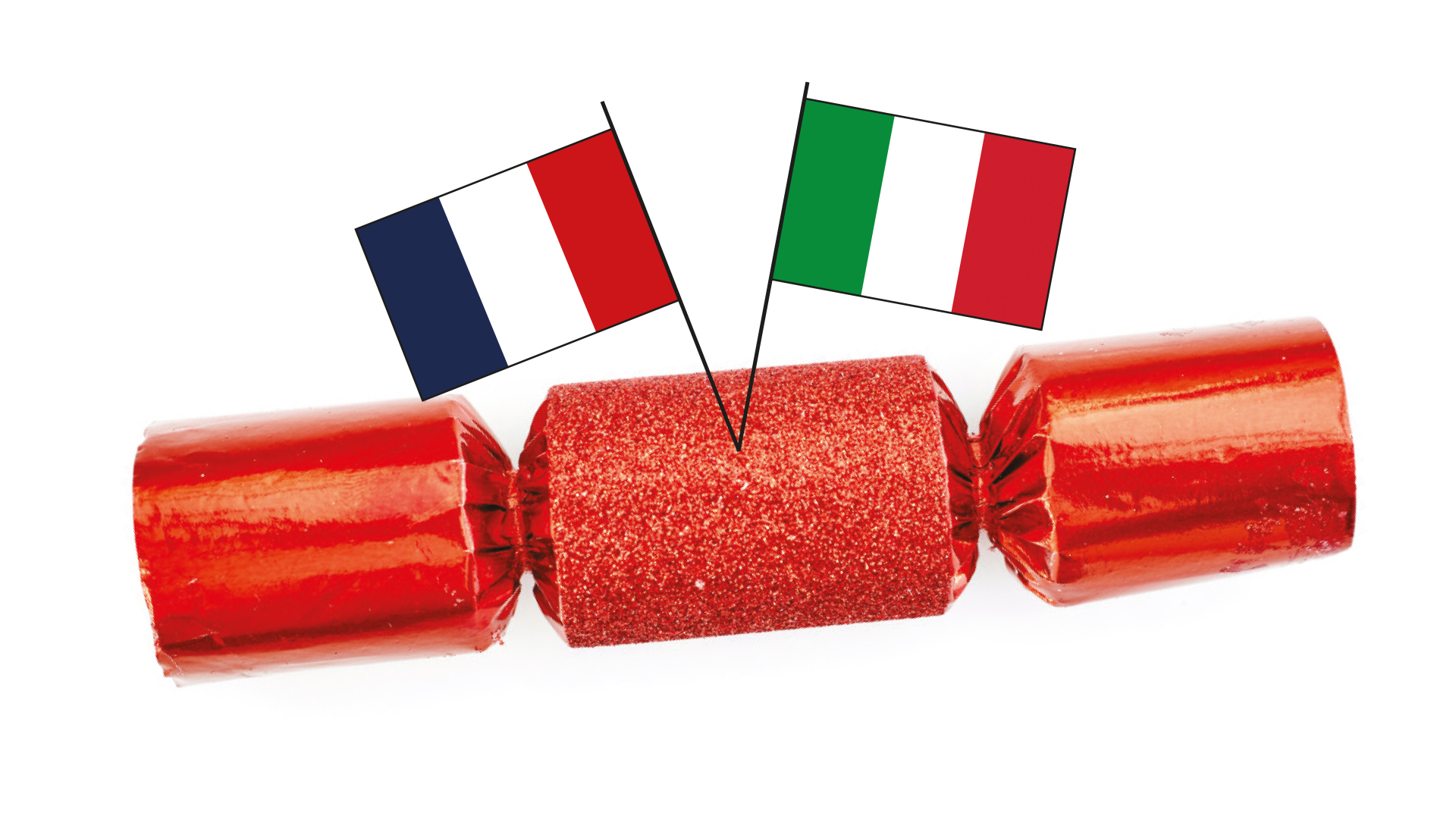
Crackers: French/Italian
Image: Shutterstock
Strictly speaking, Christmas crackers are an English invention. But pull gently on their origin story and there’s a shock in store.
Arriving back in London after an 1840 visit to Paris, confectioner Tom Smith had an idea. During his trip, he’d seen sugared almond bonbons sold in twisted paper packages. What if he could sell this French product to the Brits?
They were so popular that Victoria and Albert hung one from their own Christmas tree. But what we know as the crackers of today were born when Smith came up with the “bangs of expectation” – not to be confused with what Traitors contestants experience when Claudia Winkleman walks in.
There is some debate over exactly how Smith got the idea. One tale has it that he was awoken from a nap by the crackle of a log on a fire, jarred from slumber shouting “bangs for bonbons”. Another account claims that Smith purchased the recipe from a pyro-technician at a Nunhead firework factory.
Either way, in 1861 bangs of expectation were born, and the technique Smith used is credited as having been honed by Italian chemist Luigi Valentino Brugnatelli. They soon became known as crackers, and after Smith’s death his son Walter began putting paper hats inside.
Sprouts
Brussels sprouts.
Advertising helps fund Big Issue’s mission to end poverty
Buy from your local Big Issue vendor every week – or support online with a vendor support kit or a subscription – and help people work their way out of poverty with dignity.
Advertising helps fund Big Issue’s mission to end poverty