Right Said Fred – that’s right, the I’m Too Sexy singers – also spoke out: “When we were protesting in Oxford against 15 minute cities we were called conspiracy theorists. But as with so many conspiracy theories these days they’re normally just a year or two ahead of the truth.”
Opposition wasn’t just on X either. Former Tory MPs Sir John Redwood and Sir Jacob Rees-Mogg called the measures an attack on “freedom of choice” and bemoaned that the government “just don’t understand how modern people live”.
What’s the reality?
Firstly, the Oxford traffic filter trial has very little to do with the concept of a 15-minute city at all
A 15-minute city simply means all essential amenities should be within a 15-minute walk or cycle for residents rather than relying on cars.
For some conspiracy theorists, this has come to mean an attack on freedom, arguing that people will be restricted from leaving their homes and forced to live within a 15-minute radius of where they live.
This has been widely debunked.
Advertising helps fund Big Issue’s mission to end poverty
Nicholas Boys Smith, the chairman of urban planning think tank Create Streets, has written widely on the subject.
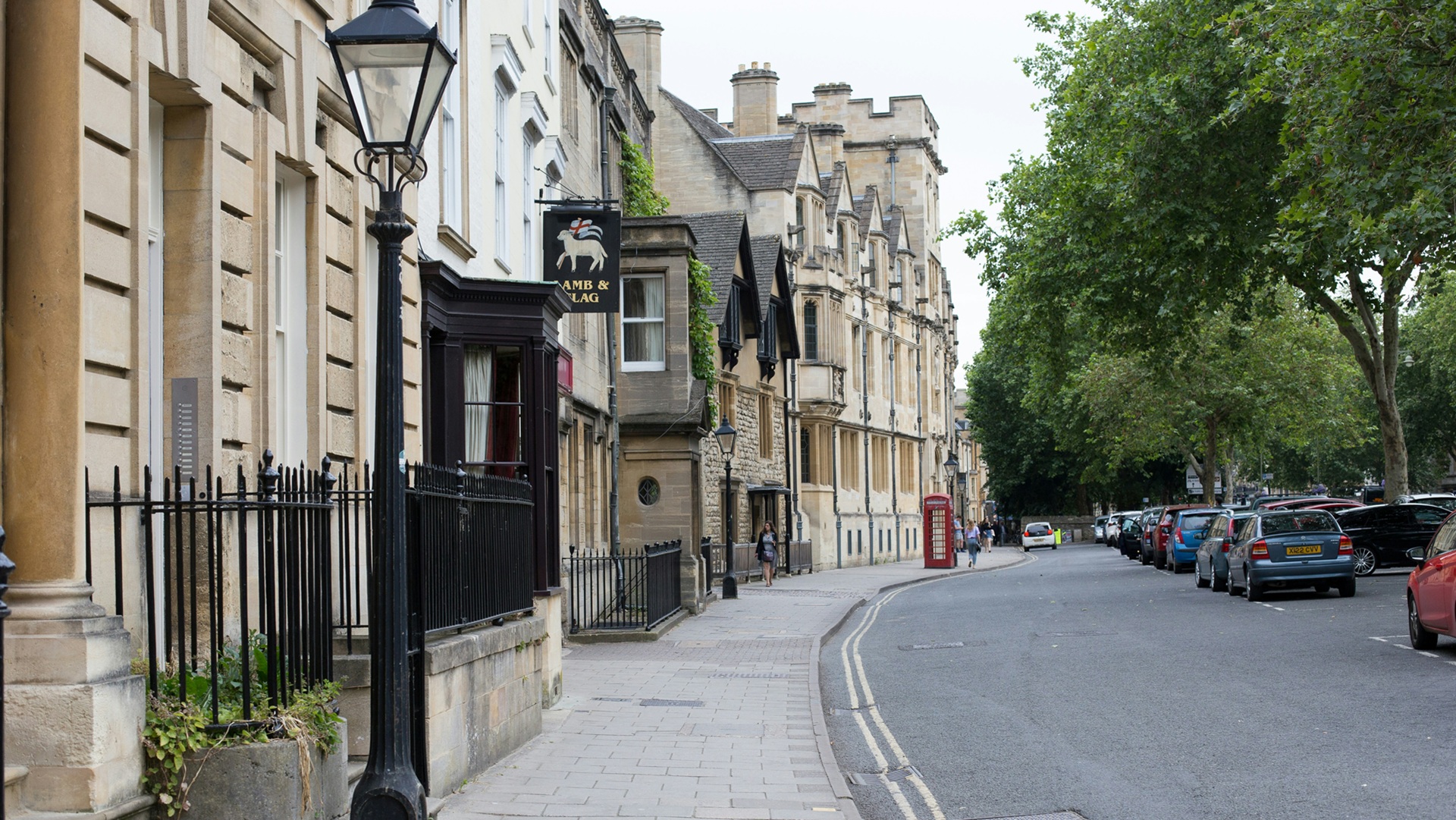
He said: “If you live in any neighbourhood built before the 1950s then the chances are you already do live in a place with some or many of the characteristics of a 15-minute city and are able (more or less) to walk to the pub, to the corner shop or to a nearby school. If you are richer, then you are more likely to live in such a place.”
The idea of having everything on your doorstep is even popular on X with some users pushing back against Sharron Davies in particular.
Colin Walker, head of transport at the Energy and Climate Intelligence Unit, posted: “Damn right – having things like shops and schools within a 15 min walk of your house is an OUTRAGE.”
Other users asked: “Why is having amenities near people a bad thing?” Or described the concept as “a dream”.
Oxfordshire County Council confirmed to Big Issue that the proposed traffic filters trial has nothing to do with the concept of 15-minute cities.
Advertising helps fund Big Issue’s mission to end poverty
Councillor Andrew Gant, Oxfordshire County Council’s cabinet member for transport management, told Big Issue: “I read the article in the Daily Express and my jaw nearly hit the floor. I mean, it is a quite extraordinary misrepresentation of what this scheme does.
“This scheme is a perfectly sensible attempt to manage a finite resource, which is road space, in a way which is sensible for the majority of people and delivers benefits. What really shuts the city down is roads that you can’t get across on foot or get along in a car. That doesn’t help anybody.
“What this scheme does is make it better for people to get around by managing who’s using the road and in what way. It has got absolutely nothing to do with these absurd ideas about creating zones stopping people going anywhere.It simply does not do that. It makes it easier for people to go about their daily lives.”
Read more:
So what is the plan? Well, it doesn’t involve dividing Oxford up to six restrictive zones for a start.
The traffic filters trial will come into force this summer to essentially act as a traffic calming measure to ease congestion in Oxford that has been affecting the bus network. A congestion charge was introduced last October as a temporary measure.
Advertising helps fund Big Issue’s mission to end poverty
It will affect six roads with cars needing a permit to drive through a filter when they are operating. There are 17 different types of permit, some of which allow for unlimited journeys through the traffic filters. Details on the permits can be found here.
Oxford and the council confirmed there will be no physical barriers in place and that “everywhere in Oxford will be accessible by car, even without a permit” although motorists may sometimes have to take a different route.
“No resident would be confined to their local area,” an Oxfordshire County Council spokesperson told Big Issue.
“Mis-information circulated in late 2022, early 2023, linking the traffic filters to the 15-minute neighbourhoods proposal in the city council’s Local Plan 2040, suggesting that the traffic filters will be used to confine people to their local area. This is not true.”
Oxfordshire County Council confirmed that DVLA data will be used to “exclude non-relevant vehicles from enforcement” through ANPR licence plate recognition systems.
“I would ask them [Oxford residents] to try and take the time to read accurate accounts of what these schemes are. It’s all on our websites,” added councillor Gant.
Advertising helps fund Big Issue’s mission to end poverty
He added: “Traffic policy should be boring. It’s about bus journeys. It’s about the numbers of cars. It’s a way of managing something properly.
“But in the end the thing that really shows people how something works is to do it. People in Oxford are not going around saying, “Well, this is terrible. You nailed my front door shut and I can’t visit my granny.” They’re saying, “Oh, look, my bus is going faster.” That works for me.”
It’s unlikely to be the last time there will be controversy over 15-minute cities but perhaps conspiracy theorists can get back in their lane.
Do you have a story to tell or opinions to share about this? Get in touch and tell us more.
Change a vendor’s life this winter.
Buy from your local Big Issue vendor every week – and always take the magazine. It’s how vendors earn with dignity and how we fund our work to end poverty.
Advertising helps fund Big Issue’s mission to end poverty
You can also support online with a vendor support kit or a magazine subscription. Thank you for standing with Big Issue vendors.