“To have a real lasting impact and ensure that no one is forced to sleep rough, this needs to be backed by concerted political action to tackle the housing crisis at a national level.
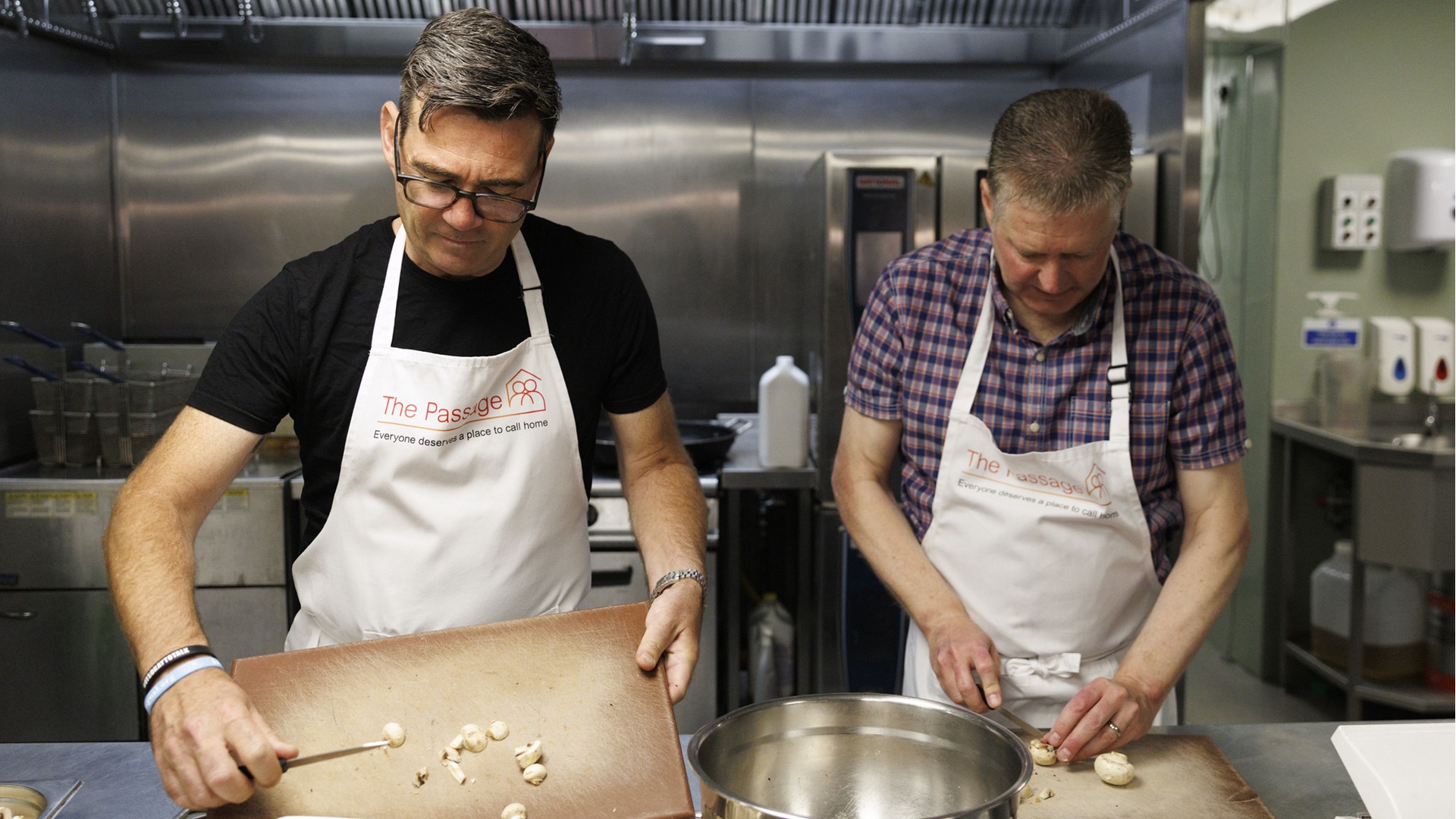
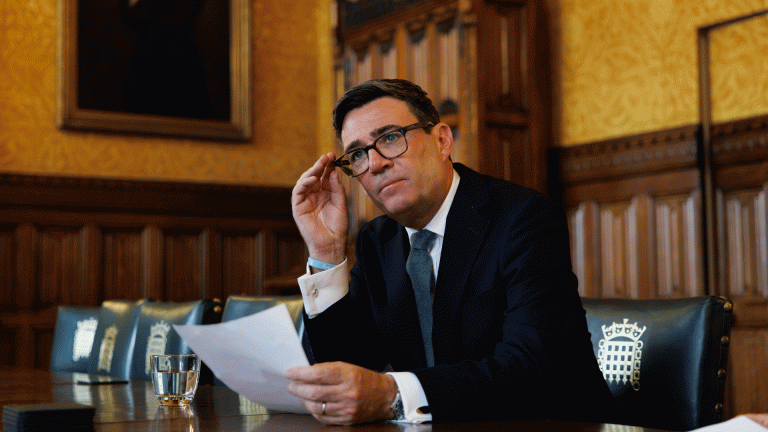
“It has been immensely hopeful to see Andy Burnham commit to ending rough sleeping as his first instruction to government. The prime minister now has a unique opportunity to pave a new path for fixing this problem by taking an approach that prioritises giving people secure homes over temporary fixes.”
In total, 680 people were considered to be living on the streets over a longer period – including 51 people who were newly sleeping rough – down 14% on the same period last year. But that total is still 72% higher than five years ago and 75% more than a decade ago.
Continue reading for free
Registration is free and takes less than 30 seconds.
Our supporters make Big Issue’s work possible. Join us to see the impact we’re having together and discover more ways to help people facing poverty access income, opportunity and support.
The number of people sleeping rough for the first time fell 16% annually with 1,685 people introduced to the streets. Of those, 1,300 people spent just one night sleeping rough.
Last year London mayor Sadiq Khan, who has a rough sleeping plan of action to end street homelessness in the city by 2030, told Big Issue it would take until 2026 before numbers would fall.
A spokesperson for the Mayor of London said: “It is encouraging to see a further fall in rough sleeping in London. This shows that the mayor’s rough sleeping plan of action, launched last year, is having an impact but we know there is more work to do.
Advertising helps fund Big Issue’s mission to end poverty
“The mayor is focused on doing everything he can to get London on a pathway to ending rough sleeping for good by 2030, particularly to tackle longer-term rough sleeping.”
The Chain figures also showed a steep fall in the number of young people sleeping rough.
In total, 202 18- to 25-year-olds and under were recorded as sleeping rough between April and June, almost half the number recorded in the same period in 2025.
Read more:
Lisa Doyle, head of policy and public affairs at Centrepoint, said: “This fall in numbers shows that rough sleeping can be ended.
“London is providing the blueprint for what can be achieved when political leaders have the vision and intent to end street homelessness.”
Advertising helps fund Big Issue’s mission to end poverty
There is plenty of optimism in the homelessness sector following Burnham’s declaration, and the latest statistics have built on that.
Rick Henderson, CEO of Homeless Link, the national membership body for frontline homelessness services, said “we have reached a seminal moment where real change seems possible”.
John Glenton, chief care and support officer at Riverside, described overall the fall in rough sleeping as “very encouraging”.
“It is vital to remember that we have successfully tackled this issue before,” said Glenton.
“Within the past two decades when homelessness and supported housing services across the country were sufficiently funded, homelessness was halved and rough sleeping was cut by more than two-thirds.
“With the right mix of funding, services which meet the growing complexity of need, and tailored support, we can achieve this again.”
Advertising helps fund Big Issue’s mission to end poverty
‘We need to make sure Wales keeps the same focus’
When Burnham made his big pledge to end rough sleeping, he largely meant in England, despite being prime minister for the United Kingdom.
That’s because homelessness and housing in Wales is devolved, meaning that is the responsibility of the Welsh government.
But rising rough sleeping in Wales demonstrates the challenges in reducing the number of people on the streets.
New official statistics released on Thursday (30 July) showed there were an estimated 162 people sleeping rough throughout Wales. That’s the highest number recorded in May over the last three years.
Like London in relation to England, Cardiff makes up the majority of rough sleeping in Wales.
Local authorities reported 45 people were on the streets in the Welsh capital, followed by 18 in Swansea, 16 in Bridgend, 15 in Pembrokeshire and 14 in Torfaen. Other local authorities reported fewer than 11 people on the streets while four councils said there were zero people sleeping rough.
Advertising helps fund Big Issue’s mission to end poverty
Sian Aldridge, CEO of Wales’s largest homelessness and rough sleeping charity The Wallich, said: “To hear a prime minister say that tackling rough sleeping is a priority, is pretty incredible. We now need to see action.
“The homelessness figures for Wales demonstrate the reasons why this is needed. We know at The Wallich that ending rough sleeping is possible with determination and political leadership. We did it in Covid and we can do it again, but it needs to be backed up with the funding and support models to help people into affordable long-term homes.
“With housing being devolved to Wales, and the £340 million pledge by the Burnham government only relevant to England, we need to make sure Wales keeps the same focus.”
One of Welsh Labour’s last acts in power before Plaid Cymru replaced them in May’s Senedd elections was to introduce the Homelessness and Social Housing Allocation Act.
The new law promises to put more of a focus on preventing homelessness – as Burnham has promised in England. It aims to abolish priority need rules and give marginalised people like care leavers greater access to social housing.
It remains to be seen how the Plaid Cymru government implements the new legislation.
Advertising helps fund Big Issue’s mission to end poverty
“The new Homelessness and Social Housing Allocation Act is a great example of how we can change the housing system for the better, and there are many more solutions that both governments can use to tackle the housing crisis,” said Aldridge.
“But the new Welsh government needs to see through its commitment to implementing the act, ensuring no wrong door to accessing help, and investing into the housing support and prevention budget which provides that help.
“We hope to see a refreshed Welsh government action plan with a clear roadmap to ending homelessness. It also must deliver on its commitment to deliver 20,000 social homes by 2030, because we have a severe lack of homes in Wales that people can afford.”
Do you have a story to tell or opinions to share about this? Get in touch and tell us more.
Change a vendor’s life.
Buy from your local Big Issue vendor every week – and always take the magazine. It’s how vendors earn with dignity and move forward.
Advertising helps fund Big Issue’s mission to end poverty
You can also support online:
Subscribe to the magazine or support our work with a monthly gift. Your support helps vendors earn, learn and thrive while strengthening our frontline services.
Thank you for standing with Big Issue vendors.