The Welsh government is also focusing on more social housing to ease its own homelessness crisis and is introducing new legislation to bring a new “radical” approach to prevention.
Meanwhile, London mayor Sadiq Khan promised to end rough sleeping in the city by 2030 before his re-election.
But before you can tackle a problem, you must first learn the scale of the issue. That’s why it is vital that we know the facts and figures about homelessness. Here are the numbers you need to know:
How many people are homeless in the UK? How does the UK compare to other countries?
Homelessness in England, Scotland and Wales (as well as Northern Ireland) is typically measured separately but recent analysis by the FT found that one in every 200 households in the UK is experiencing homelessness.
That means the UK does not fare well against other developed countries.
John Glenton, executive director of care and support at Riverside housing association, said: “Shamefully, the UK tops the global league table with by far the highest rate of homelessness in the developed world with one in 200 households living in emergency temporary housing.
Advertising helps fund Big Issue’s mission to end poverty
“It is now crucial to focus on solutions and work with the government to end this national scandal and international embarrassment.”
How many people are homeless in England?
The latest official statistics show 330,410 households were owed support to prevent or relieve homelessness after contacting their council for help in 2024-25. That’s a 0.9% increase on the previous year.
Record numbers of households are living in temporary accommodation in England. A total of 134,760 households were living in temporary accommodation as of September 2025 – a record-high and 7% higher than a year ago.
The total number of children living in temporary accommodation has now reached 172,420.
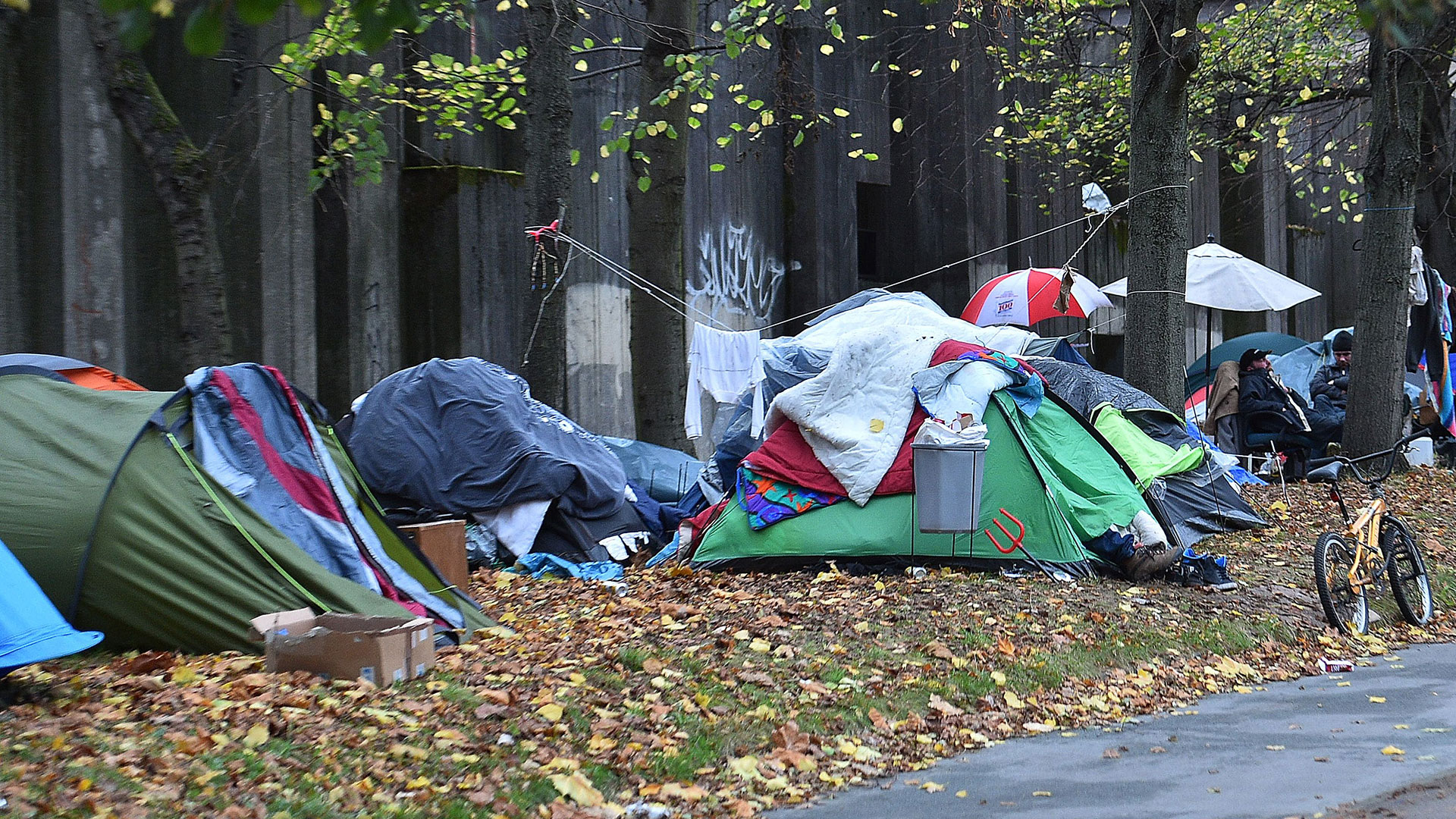
The official rough sleeping snapshot revealed 4,793 people were homeless on England’s streets in autumn 2025 based on single-night counts and estimates by frontline workers and local authorities.
That figure is a record high and is also 171% higher than in 2010 when the count began.
Advertising helps fund Big Issue’s mission to end poverty
The Ministry of Housing, Communities and Local Government also tracks rough sleeping over the course of a month in England. That data found an estimated 8,010 people slept rough in December 2025, up 7% on the same month a year previously.
The London-only Combined Homelessness and Information Network (Chain) figures are considered to be more accurate than the official one-night count.
The most recent annual count showed 13,231 rough sleepers spotted on London’s streets between April 2024 and March 2025. That’s record high and a 10% increase on the previous year’s total as well as 63% higher than a decade ago.
How many people are homeless in Wales?
The most recent statistics showed more than 13,287 households needed support from councils due to homelessness between April 2024 and March 2025.
A total of 10,876 people were living in temporary accommodation as of September 2025.
An annual rough sleeping count has been scrapped in Wales as of 2024 while an estimated 160 people were sleeping rough as of September.
Advertising helps fund Big Issue’s mission to end poverty
The Welsh government is working on new legislation with the Homelessness and Social Housing Allocation (Wales) Bill looking to move towards preventing homelessness.
How many people are homeless in Scotland?
The most recent annual statistics found there were 34,067 households classed as homeless by local authorities in 2024-25, including 38,674 adults and 15,046 children.
A total of 17,240 households were living in temporary accommodation in 2024-25, up 6% from 16,330 the previous year. There were 10,180 children in temporary accommodation as of March 2025, down from 10,360 six months earlier.
The Scottish government has declared a housing emergency in the country.
Scotland doesn’t use the same method of counting rough sleeping as England and Wales. Rather than counts and estimates, statisticians rely on reports to local authorities.
The number of households that reported sleeping rough the night before applying to local authorities for support rose from 1,932 to 2,465 applications between 2023-24 and 2024-25. Meanwhile, 3,058 households said they were sleeping rough in the three months prior to contacting local authorities for help.
Advertising helps fund Big Issue’s mission to end poverty
How many women are sleeping rough in the UK?
Women are often missing from rough sleeping counts because they tend to be less visible than male rough sleepers due to the risk of violence on the streets. That means women are more likely to seek shelter in cafes, transport hubs or other places rather than bedding down outside.
A coalition of homelessness and women’s organisations in London joined forces to tackle the issue in October 2022. Their first national census across England found the number of people sleeping rough could be as much as 10 times higher than the official rough sleeping count.
How does homelessness affect health?
Poor health can cause homelessness but health worsens when people lose their home.
Homeless Link’s Unhealthy State of Homelessness 2025 report found 80% of people experiencing homelessness are dealing with multiple physical health issues.
Chronic breathing problems, heart problems and cancer are the most diagnosed, meaning thousands of people are dealing with debilitating conditions while sleeping rough, in hostels or in unsuitable temporary accommodation.
Homeless Like found nearly 60% of people experiencing homelessness and ill health receive a physical health diagnosis before becoming homeless, including in conditions such as epilepsy, diabetes and traumatic brain injuries.
Advertising helps fund Big Issue’s mission to end poverty
The research, based on experiences of more than 700 people experiencing homelessness, found half of people sleeping rough said their health had declined over the last 12 months.
Rick Henderson, chief executive of Homeless Link, comments: “This new evidence that we are not preventing people who are already unwell from becoming homeless is utterly devastating. The research makes clear that homelessness is not only a housing problem, but also a health problem.”
What do people think about homelessness?
Four out of five Brits think that homelessness is a serious problem, according to an Ipsos poll for the Centre for Homelessness Impact at the end of 2024.
The poll, which quizzed 2,142 people on their views on homelessness, found 70% of those surveyed agreed that homelessness doesn’t get enough attention in society.
Most people – around two-thirds – believe that homelessness will increase in the UK over the next 12 months while barely a quarter think homelessness can be ended and twice as many think homelessness is inevitable.
But 79% of Brits told pollsters that identifying people who might be at risk of homelessness earlier, such as in health and education, would make a difference.
Advertising helps fund Big Issue’s mission to end poverty
Ligia Teixeira, chief executive of the Centre for Homelessness Impact, said: “These survey results highlight the pressing need for bold, preventative action to address homelessness. With over half the public supporting investment in prevention and 75% calling for affordable housing and stronger government guarantees, the message is unmistakable: prevention and structural solutions must take centre stage if we’re to break the cycle of homelessness for good.
“While the numbers reveal the scale of the challenge, they also reflect a shared belief in the power of prevention and systemic change. This is a call to action for all of us – government, communities, and individuals – to work together to ensure everyone has access to a safe, stable home.”
A further Ipsos poll from St Mungo’s found more than half of Brits believe there will always be significant levels of homelessness in the UK.
Pollsters found that the main reason people have not given their support to others facing homelessness came down to a lack of cash, food or clothes to donate. That was the case for 29% of adults, while 23% said there is no point in supporting people experiencing homelessness because they feel it won’t make a difference.
What is hidden homelessness?
Hidden homelessness is the term used to describe people who do not have a permanent home and instead stay with friends or family.
Also known as sofa surfing, many people in this situation may not consider themselves homeless and may not seek support from services. This makes it difficult to know exactly how many people are homeless, especially as they are not on the streets like rough sleepers and, therefore, not visible to frontline homelessness outreach workers.
Advertising helps fund Big Issue’s mission to end poverty
Homelessness charity Crisis has estimated that as many as 62% of single homeless people do not show up on official figures and run the risk of slipping through the cracks.
The Office for National Statistics carried out a review into the scale of hidden homelessness across the UK in March 2023 but statisticians noted that the available information means “it is not currently possible to estimate the true scale of hidden homelessness across the UK”.
However, the review showed that hidden homelessness could take many forms: whether it be sofa surfing, living in unconventional structures like mobile homes or outbuildings, squatting or overcrowded accommodation.
The review also showed that women, young people and ethnic minority groups are more likely to find themselves affected by hidden homelessness.
How do most people who are homeless die?
Nearly one in three people die from treatable conditions, according to a 2019 University College London study. Researchers warned that more preventative work was needed to protect physical health and long-term condition management, especially for more common conditions such as cardiovascular disease.
Homeless deaths have only been counted in recent years. The Bureau of Investigative Journalism’s pioneering Dying Homeless project counted the deaths of 796 people in 18 months before handing over the project to the Museum of Homelessness in March 2019.
Advertising helps fund Big Issue’s mission to end poverty
MOH’s count recorded more than 1,611 deaths across the UK in 2024 – that represented a 9% increase on 2023.
“Our investigation shows how homeless people continue to be deeply failed. We are calling for urgent action from the government to alleviate this crisis.” said MoH co-director Matt Turtle.
Read more:
MOH used a combination of freedom of information requests, local news reports and submissions from the public to produce a count covering all kinds of homelessness, ranging from rough sleeping to people living in hostels and temporary accommodation. That method differs from the official counts where death certificates are analysed for signs a person died without a stable home.
The first official Office for National Statistics figures for England and Wales arrived three months before the end of TBIJ’s project, reporting 597 estimated deaths in 2017. The most recent count reported 688 people died without a secure home in 2020 with Covid accounting for just 13 deaths.
The ONS consulted on plans to discontinue homeless deaths statistics in early 2024 – citing concerns over accuracy – but ultimately U-turned following calls for the figures to remain.
Advertising helps fund Big Issue’s mission to end poverty
The first-ever official homeless deaths count in Scotland arrived in 2020 using a similar methodology to the ONS.
The latest figures released by National Records of Scotland (NRS) found there were an estimated 231 deaths of people experiencing homelessness in Scotland in 2024. This was slightly lower than the previous year, in which 242 deaths were recorded, but higher than when figures were first recorded in 2017.
How can we end homelessness?
Homelessness is a complex issue and, as a result, there is no one-size-fits-all solution.
It takes effort to remove the reason why someone is homeless and also treatment for the trauma and mental toll of homelessness.
More broadly, there also needs to be efforts to address the systemic drivers of homelessness and that also takes political will to focus the sufficient resources in the areas where they will make a difference.
Homelessness experts, charities and organisations propose plenty of changes to how society operates to end homelessness for good. That includes tackling drivers of homelessness evictions from private rental homes, benefits that don’t keep pace with inflation and unaffordable housing. Other solutions, like Housing First, are aimed at helping people off the streets.
Advertising helps fund Big Issue’s mission to end poverty
You can keep the pressure on the politicians too by writing to your local MP, AM or MSP urging them to keep ending homelessness top of the agenda in parliament.
You can also give your time or money to volunteer and donate to help homeless charities doing vital work to help and house people affected by homelessness. There are tons of ways to help a homeless person, even just by donating your coat to help out in winter – cold temperatures are particularly dangerous for rough sleepers.
If you see a person experiencing homelessness on the street in England and Wales, you can contact Streetlink to connect them with support services.
And, of course, you can buy or subscribe to The Big Issue magazine to help us support vendors all over the UK, giving them the means to lift themselves out of poverty.
Big Issue Group is also going beyond the magazine in its mission of Changing Lives Through Enterprise. Find out more here.
Do you have a story to tell or opinions to share about this? Get in touch and tell us more.
Advertising helps fund Big Issue’s mission to end poverty
Reader-funded since 1991 – Big Issue brings you trustworthy journalism that drives real change.
Every day, our journalists dig deeper, speaking up for those society overlooks.
Could you help us keep doing this vital work? Support our journalism from £5 a month.