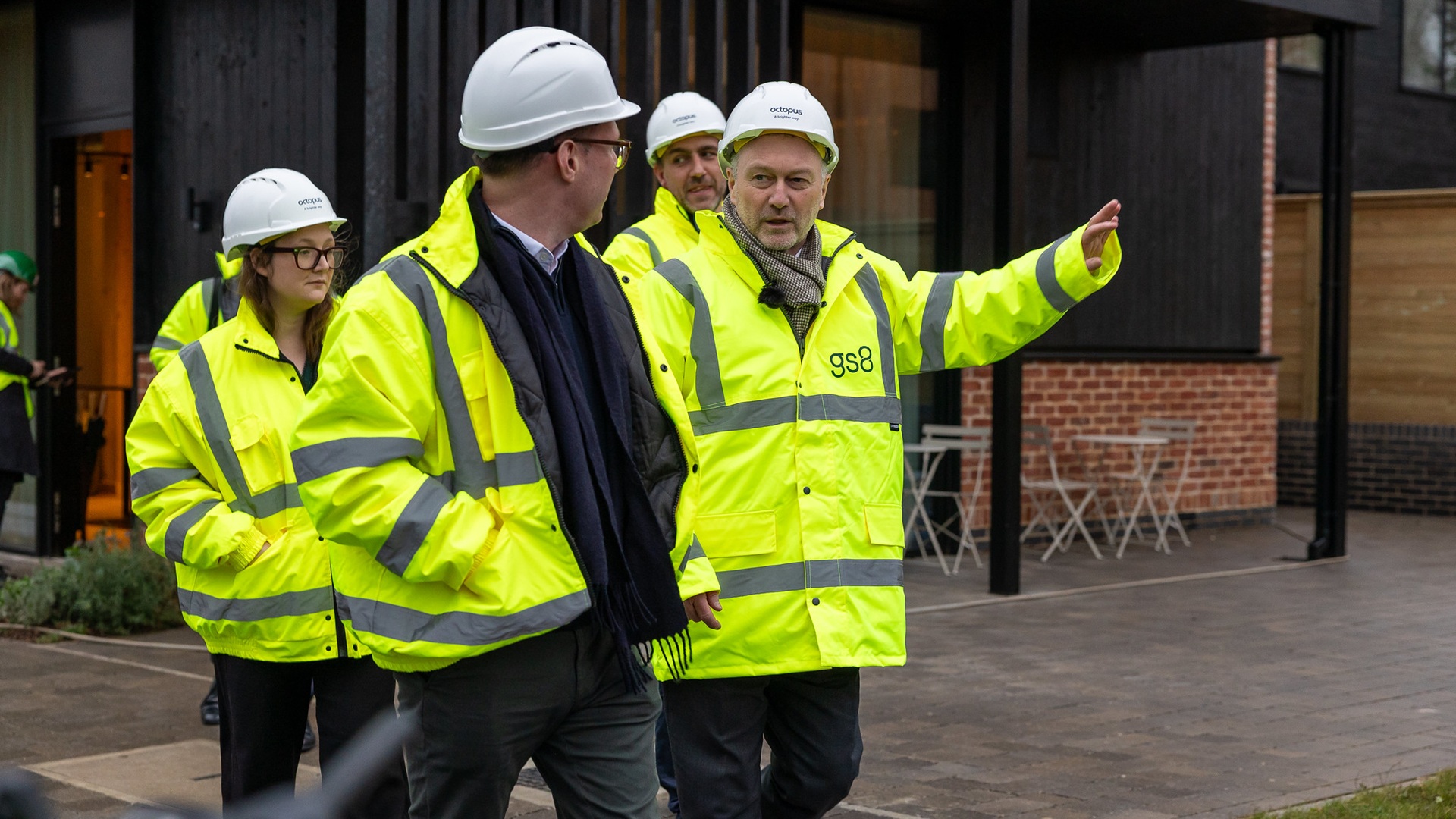
“We’re ushering in a new era to build 1.5 million homes that will give families a secure roof over their head, alongside key infrastructure to create high-paying jobs and power our homes and businesses. That’s exactly the Britain I want to see so it’s time to get on with the job and build baby build.”
The government has launched a consultation on reforms to the National Planning Policy Framework too.
Councillor Tom Hunt, chair of the Local Government Association’s Inclusive Growth Committee, said the proposed changes are “some of the most significant we’ve seen”.
He added: “Planning committees are the democratic backbone of the planning system, with councils being accountable to their communities about what should be built where. This is a central tenet that must remain under a reformed planning system.”
Here are five things that the Planning and Infrastructure Act is looking to make easier to build.
1. Building 1.5 million homes
Labour is widely expected to miss its target of building 1.5 million homes in England while in power.
Advertising helps fund Big Issue’s mission to end poverty
Government statistics show that only 208,600 homes were added to the country’s housing stock in 2024-25, down 6% on the previous year.
Ministers have previously said that they expect housebuilding to ramp up in the second half of Labour’s term rather than delivering 300,000 homes each year.
But the Home Builders Federation reported that planning permission was granted for just 42,000 new homes in England during the third quarter of 2025. That was down 31% year-on-year and the lowest quarterly total in over 15 years.
The Planning and Infrastructure Act is hoping to speed up planning permission by creating a permanent presumption in favour of suitably located development. That means proposals on suitable land in urban areas can be considered acceptable by default.
There also measures to boost densification of suburban and urban land.
Chancellor Rachel Reeves has previously said that “bats and newts” will no longer block development in response to fears that reduced red tape will see nature and conservation put to one side.
Advertising helps fund Big Issue’s mission to end poverty
The act includes a nature restoration fund which the government said will allow developers to build while Natural England can put in place pro-nature measures at scale to restore natural habitats and wildlife.
2. Building homes around train stations
Earlier in 2025, Big Issue wrote about proposals to increase the amount of homes built around railway stations. Now it’s a central part of Labour’s bid to get on track.
The new law means ‘suitable’ proposals that develop land around railway stations within existing settlements and around ‘well-connected’ train stations will get a default yes, even if they are on traditionally protected green belt land.
In practice, proposals will get the greenlight if they are within walking distance – around 800 metres – of a railway station which is served by at least two trains per hour in one direction.
The government’s strategy to boost economic growth rests on making the most of high levels of connectivity and improving access to jobs and services and building homes around train stations is part of how they aim to do that.
3. Building reservoirs and other large infrastructure projects
It is more than 30 years since a major reservoir was built in the UK.
Advertising helps fund Big Issue’s mission to end poverty
In that time, privatisation, a growing population and climate change has put strain on the water system.
The National Drought Group in England has already issued a warning for ongoing drought in 2026 despite recent wet weather.
The new law will enable non-water sector companies to build reservoirs at a faster rate by designating them as nationally significant infrastructure projects.
Water minister Emma Hardy said: “Water security is critical for our economy, food, energy, housing, and environment. Yet even as shortages grow, we haven’t built a new reservoir in 30 years.
“That’s why we’re cutting red tape and fast-tracking vital reservoirs. With £104 billion already secured for the water sector, our water white paper will deliver long-term reforms to get spades in the ground and infrastructure built.”
The new legislation will also limit legal challenges to significant infrastructure projects to only one attempt rather than three.
Advertising helps fund Big Issue’s mission to end poverty
Read more:
4. Building new towns
The new legislation beefs up powers for development corporations to deliver large-scale projects and that includes building new towns.
The New Town Taskforce recommended 12 locations for new towns across England back in September, pledging to establish a ‘New Towns Unit’ to fast-track development.
Work will only start on three by the next general election but the new legislation is a step closer to getting shovels in the ground.
Housing secretary Reed said 300,000 homes could be delivered from the new towns with a taskforce recommending that 40% of these are affordable homes with half for social rent. GP surgeries, green spaces, libraries and transport are also part of the developments.
5. Building green projects
The government said the new act will take a “proactive approach to both mitigation and adaptation” in relation to climate change and also aims to move away from “unattractive environments dominated by cars”.
Advertising helps fund Big Issue’s mission to end poverty
Other green measures include a new scheme to slash energy bills for people living near pylons by up to £2,500.
The new rules also paves the way for clean power projects to be prioritised for grid connections.
Ministers said ‘zombie projects’, as they are known, were previously facing 15 years to be connected to the energy grid and speeding up connections will help deliver energy security.
Do you have a story to tell or opinions to share about this? Get in touch and tell us more.
Change a vendor’s life this Christmas.
Buy from your local Big Issue vendor every week – or support online with a vendor support kit or a subscription – and help people work their way out of poverty with dignity.
Advertising helps fund Big Issue’s mission to end poverty