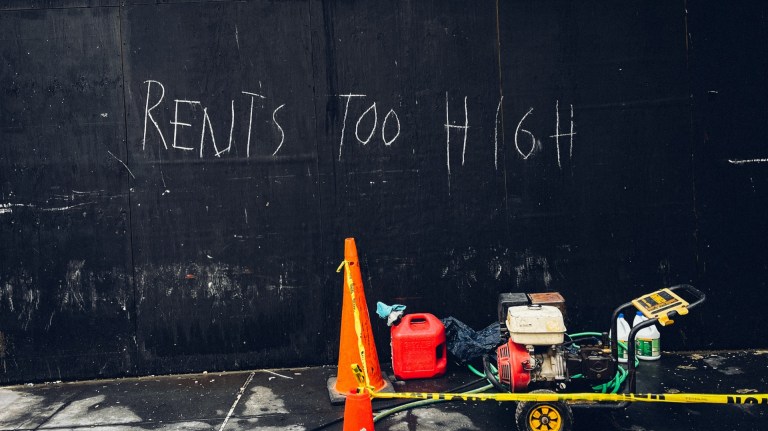
The rent hike acted as a form of eviction for Ely, who works in housing. He left the property and his housemates behind in April.
“I had been invested in it,” he said. “I was very embedded in the area and there was a sense of community in Hackney. The only place I could afford was in Lewisham.
“It’s been really horrible. My housemates are still in the house and it has broken something quite profound. To be in that house, to have built something nice together and then for it all to fall apart: it kind of puts strain on our relationships and just any sense of stability or understanding of what one’s future is.
“It’s just something that you have almost no control over. Suddenly this guy who I hadn’t even heard of a year ago could suddenly totally determine this thing.”
The Renters’ Rights Act has changed how rent increases are handled and challenged. Here’s everything you need to know if you find yourself in a situation like Ely where your landlord is overcharging you for rent.
How are rent increases changing under the Renters’ Rights Act?
Since 1 May 2026, section 21 evictions have been abolished.
Advertising helps fund Big Issue’s mission to end poverty
Rent rises can only be served once a year, and have to be served using a formal section 13 notice.
“It is now easier to challenge our rent increases and ask the tribunal if what your landlord is asking for reflects ‘market rent’,” explained London Renters Union member Jess Redmond.
“The tribunal will not increase your rent higher than the landlord’s proposal, but it can decide the rent should be much lower.”
What is the Resist Rent Rises campaign?
Tenants’ unions and community groups are linking up across the country to support renters to challenge their rent increases in the rent tribunal.
“By challenging our rent increases, we can save ourselves money, stay in our homes, and help to keep the rent down for our neighbours too. We can also help build the movement for rent controls.” said Redmond.
“If lots of us use our new rights under the Renters’ Rights Act and challenge our rent increases, we can show the government that more protections are urgently needed.”
Advertising helps fund Big Issue’s mission to end poverty
Tenants’ unions across the country have launched a new free online rent rise checker with resources to help renters and have pledged to support people across the country to challenge their rent increases through the new tribunal system.
The new free online tool is available at resistrentrises.org.
What can renters do if their landlord raises their rent?
To dispute a rent rise, tenants can use a first-tier property tribunal. A rent tribunal is a much simpler process than going to court and has significantly lower fees.
Renters who challenge their rent increases are on average £1,140 per year better off than they would have been had they accepted the landlord’s proposed increase, according to research by anti-poverty charity Z2K.
The tribunal looks at similar properties in the local area, as well as the condition of the property such as whether it has mould or disrepair. It then makes a determination of what the open market rent for the property would be if it was let out in its current condition.
The tribunal will then decide whether the landlord is permitted to increase the rent to the proposed amount, or whether it should be set at a lower rate. After the tribunal, your landlord cannot raise the rent again for a year.
Advertising helps fund Big Issue’s mission to end poverty
It now costs £47 to apply to but the tribunal is not allowed to set a higher rent than that proposed by the landlord and tenants can save money even if they are unsuccessful, Redmond said..
“This is because the rent rise your landlord proposes cannot apply until your case has been heard. If your landlord wanted to raise the rent by £200 a month and it takes two months for your case to be heard, this is £400 of rent saved, no matter the outcome,” she added.
For renters like Ely, the new rules must bring around a fresh conversation of what constitutes a fair rent.
“I agree that everybody should try and challenge their rent because this is a way of having this conversation about what rent should be and to have it on more equal footing,” said Ely, adding that he believes rent controls were “completely necessary”.
“We have more ability to challenge and that means that we can affect the market rate. Basically the market is just what landlords and estate agents can get away with.”
What is the Resist Rent Rises campaign?
Tenants’ unions and community groups are linking up across the country to support renters to challenge their rent increases in the rent tribunal.
Advertising helps fund Big Issue’s mission to end poverty
“By challenging our rent increases, we can save ourselves money, stay in our homes, and help to keep the rent down for our neighbours too. We can also help build the movement for rent controls.” said Redmond.
“If lots of us use our new rights under the Renters’ Rights Act and challenge our rent increases, we can show the government that more protections are urgently needed.”
Tenants’ unions across the country have launched a new free online rent rise checker with resources to help renters and have pledged to support people across the country to challenge their rent increases through the new tribunal system.
The new free online tool is available at resistrentrises.org.
No one experiencing homelessness should have to choose between their pet and a safe place to sleep.
Will you sign Big Issue’s petition to make temporary social housing pet friendly?
Why there is growing support for rent controls
Rent controls cap rents or limit rent increases for private rented properties, limiting landlords’ ability to raise rents.
Controls have previously been in place in England but currently it is the demand and supply of the market that governs how much a landlord can charge.
Advertising helps fund Big Issue’s mission to end poverty
The Scottish government has committed to introducing rent controls while they have also been explored in Wales in recent years.
There are growing calls from think tanks and pro-renter campaigners for the Westminster government to intervene on rents.
Rents are at record highs – the Office for National Statistics found £1,381 a month was the average rent for the year up to April 2026, up 3.5% annually. While the rate at which rents have been rising has been slowing in recent months, they have still increased by 8% in the last two years, in excess of wages and wider inflation.
Unlike in Scotland when rent rises were capped during the cost of living crisis, renters in England have not received any targeted support other than an eviction ban during the Covid pandemic.
Instead the housing benefit bill has exploded to subsidise rising rents, costing the taxpayer £37bn annually.
Rent controls remain controversial. The Westminster government has consistently rejecting them, echoing fears from critics that the intervention would lead to declining standards and investment in the sector and see rents rise for properties outside the cap.
Advertising helps fund Big Issue’s mission to end poverty
But there have been calls for their introduction. Sadiq Khan has repeatedly asked the government for powers to intervene in London’s private rented sector where tenants are paying the highest rents in the country.
Green Party MP Carla Denyer, alongside Mayor of Hackney Zoë Garbett and Mayor of Lewisham Liam Shrivastava, wrote to housing secretary Steve Reed ahead of the King’s Speech asking for intervention.
They wrote: “If your government is in any way serious about improving the lives of the 11 million private renters in England, you must commit to introducing rent controls now.”
Read more:
What could rent controls look like in England?
There have been fresh suggestions on how rent controls could work in England in a way that could avoid disrupting the market or break landlords finances.
The IPPR think tank suggested the introduction of a ‘double lock’ to cap rent increases to whichever is lower out of inflation or wage growth.
Advertising helps fund Big Issue’s mission to end poverty
The think tank said 45% of private renters are living in unaffordable housing, increasing to 2.5 million households by the end of 2029.
If rents had been linked to inflation or wage growth since 2020, they would have been around 7% lower, saving the average renter £850 a year across England and more than £1,700 in London.
The intervention would also have reduced the number of households facing unaffordable rents by 140,000 compared to taking no action at all.
The think tank said that building in time-limited exemptions for new-build properties could address a common complaint against rent controls: they reduce the supply of homes.
Dr Maya Singer Hobbs, senior research fellow at IPPR, said: “Government has taken important steps to strengthen renters’ rights, but it now needs to go further. A fair system of rent caps would rebalance the market, protect households from sharp increases, and ensure that rents grow in line with what people can actually afford.”
Joseph Rowntree Foundation (JRF) and Autonomy Institute have also released their own proposal on how the government could introduce rent controls without damaging the market.
Advertising helps fund Big Issue’s mission to end poverty
The pair’s proposal would be to limit rent rises in-tenancy to the current consumer price index (CPI) inflation for sitting tenants and limiting increases between tenancies to 2% above CPI.
The measures would save renters almost £1,200 per year on average, they estimated.
Autonomy Institute’s analysis of English landlords’ investments since 2018 found they have been earning more profits than in similar investments. The think tank estimated that, after tax, landlords earned 74% higher profits in 2018, 99% in 2021 and 63% more in 2024.
The proposal calls for tax changes, including reversing section 24 tax relief on mortgage interest and applying national insurance contributions (NICs), to recover profits from landlords who own without a mortgage.
But not all landlords are raking it in. Mortgage landlords making a loss should be able to apply for relief funded by applying NICs to rental income.
JRF found that introducing the proposed tax changes would lead to fewer landlords making a loss by 2030 even with a rent control than if the current tax system remained.
Advertising helps fund Big Issue’s mission to end poverty
Introducing the measures would also make the housing benefit bill more sustainable, JRF said, allowing the government to uprate local housing allowance to cover the bottom third of local market rents and deliver more than £600m in net savings by 2030.
Rosie Worsdale, senior policy adviser at JRF, said: “Renters have felt the squeeze of unaffordable rents that take up too high a proportion of their incomes for far too long. Trapped in a cycle of high rents, financial strain and no ability to save – renters are just one redundancy or illness away from a crisis. They can’t wait for the many years it will take to feel the impact of the new homes currently being built.
“By contrast, most landlords have experienced inordinate profits since 2018. However, our tax system means that the landlords profiting the most pay the least tax on their profits. What’s needed is a solution that eases the rent squeeze for renters without unintended consequences that could jeopardise the private rented sector.”
Do you have a story to tell or opinions to share about this? Get in touch and tell us more.
Change a vendor’s life.
Buy from your local Big Issue vendor every week – and always take the magazine. It’s how vendors earn with dignity and move forward.
Advertising helps fund Big Issue’s mission to end poverty
You can also support online:
Subscribe to the magazine or support our work with a monthly gift. Your support helps vendors earn, learn and thrive while strengthening our frontline services.
Thank you for standing with Big Issue vendors.