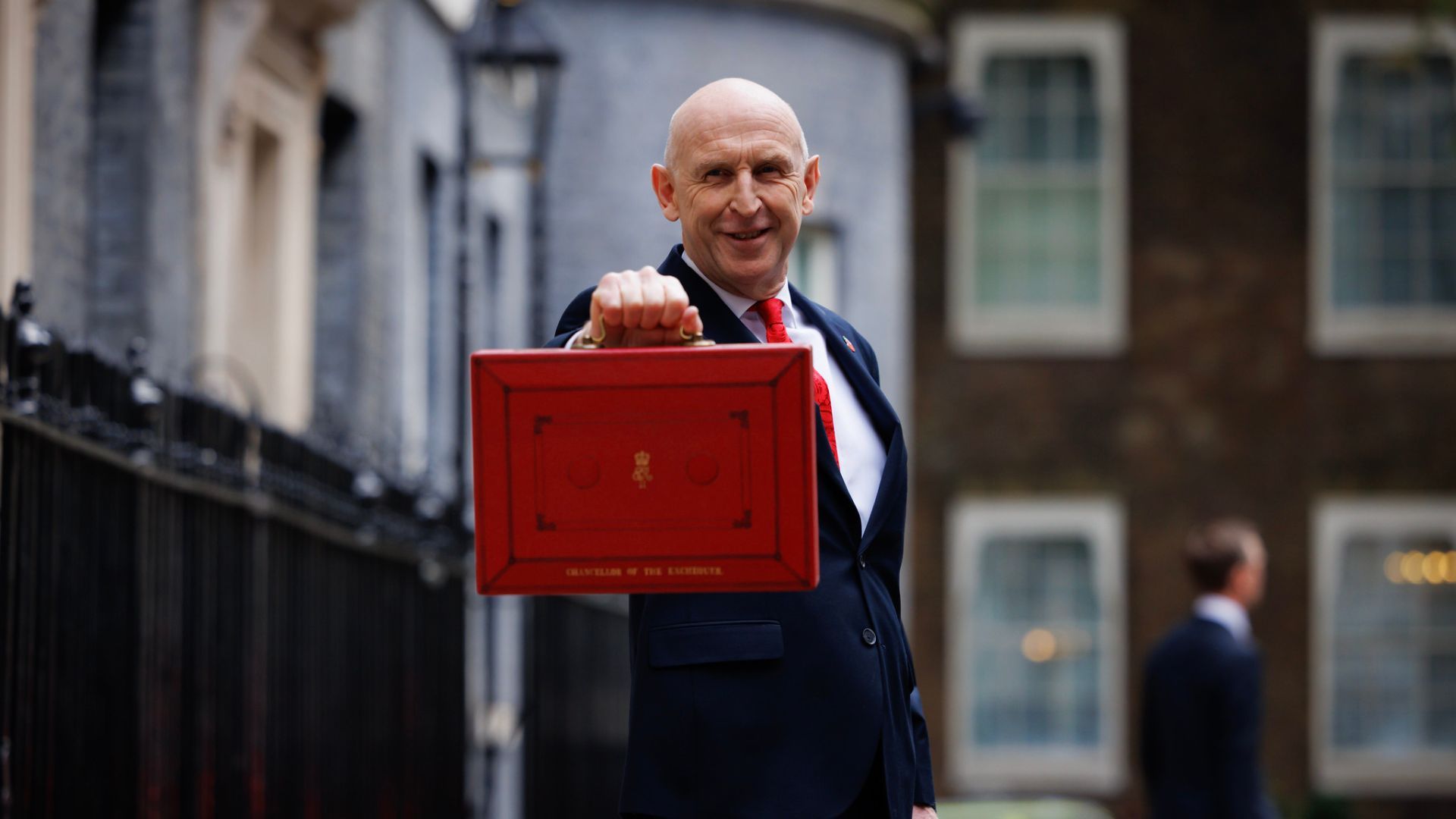
So what does this “breathing space” look like – and how much will it really save you?
1. Standing charges axed for gas – £45 per year
The government will abolish gas standing charges, saving affected households around £45 a year.
Around 23 million households pay standing charges, a daily fee added to bills regardless of how much gas they use. The flat fee takes up a larger proportion of bills for poorer households, who tend to use less energy.
Keep reading the journalism that powers our mission
Register free to continue and learn more about the stories, campaigns and the support we provide, helping people facing poverty across the UK.
Healey described the charges as “unfair and outdated” and said he would ask energy regulator Ofgem to abolish them next year. The cost will instead be paid on the unit rate rather than the £108 a year a typical household pays in standing charges.
“My budget will draw a line in the sand on an energy policy that has failed British billpayers for years, letting extra costs on bills pile high and leaving households even more exposed to global shocks,” he said.
The government has previously announced other measures to ease energy bills, including suspending VAT on electricity bills for six months starting in October. Today, this VAT cut was extended until July, later than the earlier date of March.
Simon Francis, coordinator of the End Fuel Poverty Coalition, welcomed the standing charges policy but said more was needed.
“Removing the gas standing charge will bring real relief to many low-income households who use very little energy and for prepayment customers it could stop debt building up in the summer months,” he said.
“But despite the positives of this specific proposal millions of households won’t see a saving. This means Ministers have serious questions to answer about who they are and, if they are vulnerable or on low incomes but have high energy needs, how they will be protected”
2. Energy payment – £100 this winter
The chancellor has introduced a £100 energy payment for 20 million households in council tax bands A-D.
The £2.6bn scheme will see money transferred directly into bank accounts, and will “take the pressure off in the coldest months,” Healey said.
“The Scottish, Welsh, and Northern Ireland governments will receive their share of this funding, and I call on them to do the same and give people of all nations in the UK breathing space on their energy bills this winter,” Healey told MPs.
Thinktanks have raised concern over how the support is targeted. Around one-in-eight households in the bottom half of the income distribution live in higher band properties and are expected to miss out, the Resolution Foundation has estimated.
“The Chancellor has missed the mark with badly targeted support that has left families facing a tough winter as energy bills rise,” said Ruth Curtice, Chief Executive at the Resolution Foundation. “It is also questionable whether the tight public spending plans required to meet his fiscal rules will survive reality.”
Read more:
3. Shielding low-income pensioners from paying income tax
The amount anyone can earn before paying tax – something called the “personal allowance” has been £12,570 since 2021.
But the state pension is expected to increase to £13,036.40, as it rises in step with wages due to the triple lock. This would mean that pensioners have to pay income tax – a relatively small amount, but with a large administrative burden for those impacted.
Today, Healey announced a new tax allowance for low-income pensioners that will ensure they “do not pay income tax.”
4. Carer’s allowance cliff edge addressed – up to £203 per week
In a move welcomed by campaigners, Healey has abolished the so-called ‘carer’s allowance cliff edge.’
Until now, carers have been subject to a hard earnings limit: if their net earnings exceed £204 per week, even by penny, their carer’s allowance (currently worth £86.45 per week) is stopped completely.
The rule has had serious consequences. The Department for Work and Pensions took several unpaid carers to court after they unknowingly breached the earnings limit, demanding they repay tens of thousands of pounds despite earning only a fraction above the threshold.
Many carers are already struggling financially. Previous research from Carers UK shows that nearly half (49%) have cut back on essentials such as food, heating, clothing and transport over the past year. A third (32%) have taken on debt through credit cards, bank loans or overdrafts, while 84% say their energy bills have increased.
Healey announced plans to replace the cliff edge with a tapered system, under which £1 of carer’s allowance will be deducted for every £1 earned above the limit.
Emily Holzhausen, Carers UK’s director of policy, said: “We have countless stories from carers who have shared their deep fears of going just a few pence over the earnings limit and losing all of their benefit.
“It’s absolutely right that the chancellor is thinking of practical changes that will make their lives easier. A taper on the earnings limit should give families much more choice about working and still caring.”
5. Minimum wage goes up
The minimum wage is going up, a change that was already announced. The national living wage will increase by 3.9% to £13.21 an hour, and the national minimum wage for workers between 18 and 20 years of age will be hiked to £11.27.
In its manifesto, Labour pledged to equalise the minimum wage, bringing the rate for younger workers in line with the rate for over-21s. For now, this appears to be off the cards.
6. Slightly cheaper food – £21 per year
Your weekly shop could get a tiny bit cheaper. The government will remove import tariffs on more than 100 products, including baked beans, garlic, gherkins and marmalade.
Combined with similar cuts introduced in June for products like pasta and tuna, the changes could save households up to £21 per year, the Treasury estimates.
Other products impacted include chocolate-coated wafers and waffles, boiled sweets, toffees, cough drops and plant-based drinks.
The cuts also extend beyond the supermarket shop. Removing tariffs on fertilisers is intended to help farmers facing higher costs, while kerosene tariff cuts will benefit households that use the fuel for heating.
Do you have a story to tell or opinions to share about this? Get in touch and tell us more.
Change a vendor’s life.
Buy from your local Big Issue vendor every week – and always take the magazine. It’s how vendors earn with dignity and move forward.
You can also support online:
Subscribe to the magazine or support our work with a monthly gift. Your support helps vendors earn, learn and thrive while strengthening our frontline services.
Thank you for standing with Big Issue vendors.