But this policy might not be as electorally fruitful as Nigel Farage and his team hope.
Read more:
Support for spending on disabled people remains high even among right-leaning voters, the survey found – 40% of right-leaning voters supported more spending on benefits for disabled people who cannot work, and only 10% supported less spending.
Continue reading for free
Registration is free and takes less than 30 seconds.
Our supporters make Big Issue’s work possible. Join us to see the impact we’re having together and discover more ways to help people facing poverty access income, opportunity and support.
“Despite growing political divisions on welfare, support for disability benefits remains remarkably strong,” said Dr Robert de Vries, co-author of the report and senior lecturer in quantitative sociology at the University of Kent.
“Very few people favour cuts, disabled people are seen as among the most deserving recipients of support, and proposals to reduce disability benefits appear politically risky across the political spectrum.”
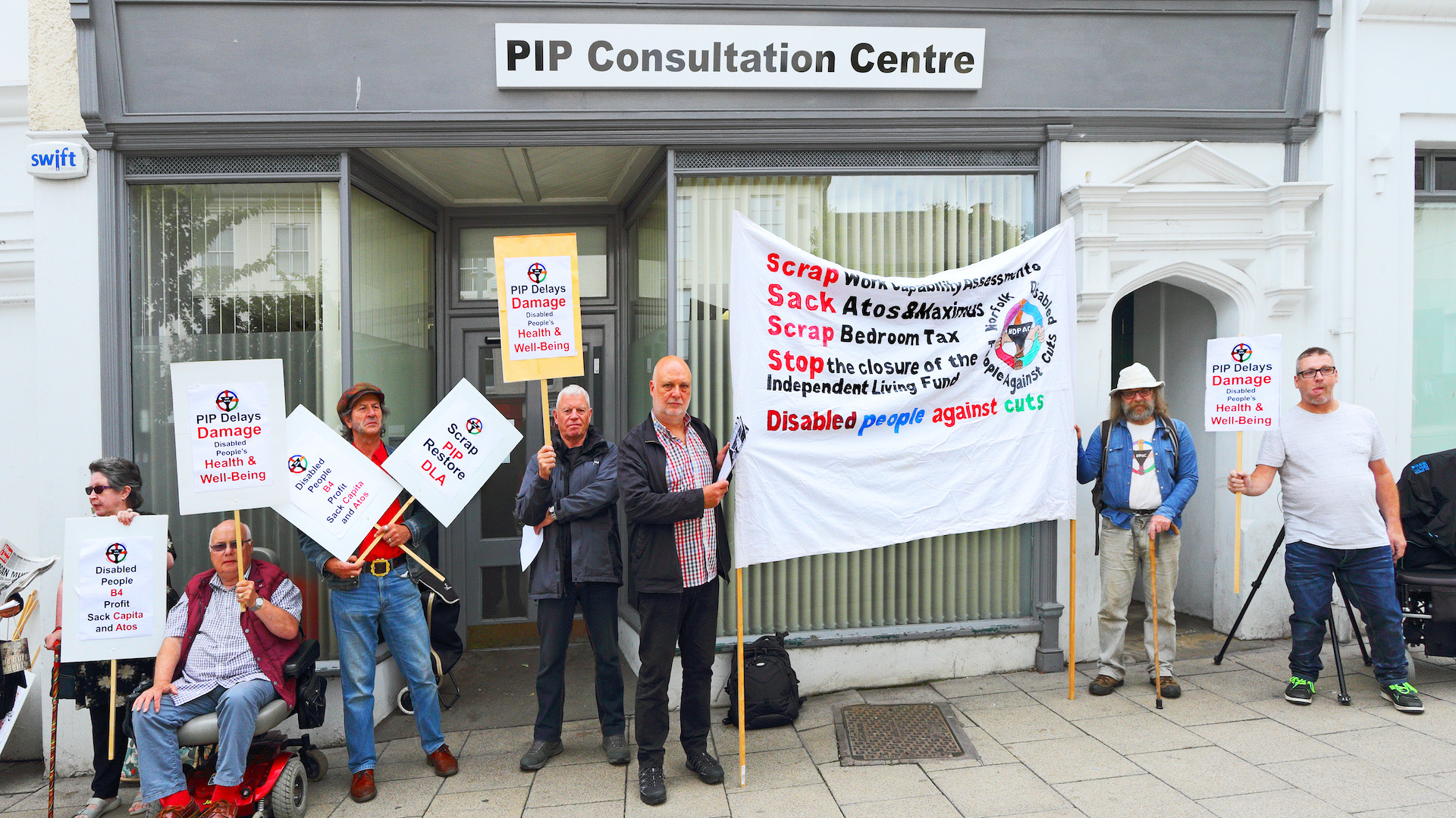
Last year, Keir Starmer was forced to abandon planned cuts to PIP worth around £5 billion after mass public opposition and a backbench rebellion.
Advertising helps fund Big Issue’s mission to end poverty
The BSA survey was conducted between August and October 2025 – right in the aftermath of this U-turn. It could have influenced the results, the surveyors concluded.
There’s an important caveat to the survey. Support for general welfare spending “for the poor” has sunk to a near record low, with just 17% of people backing more spending, compared to more than 50% in 2017.
And while support for increasing disability benefits is high, not everyone will think of disability in the same way; “Not all disability benefit claimants are perceived by everyone to be equally deserving,” the report reads.
Experts pointed to previous research that established the informal hierarchy of ‘deservingness.’ Wheelchair users and people with schizophrenia were at the top, and people with depression or asthma were at the bottom.
Reform’s proposal revolves around cutting support for those with ‘trivial conditions’ and mental health claims, a position that reflects the opinions of their supporters.
“It is… the case that right-wing people’s support for welfare is more contingent on deservingness cues than is the case for left-wing people,” the BSA report clarified.
Advertising helps fund Big Issue’s mission to end poverty
Spending on PIP – the main disability benefit – is forecast to more than double in a decade, reaching £41 billion by 2030.
Labour, Reform UK, and the Conservative Party have all said that health and disability benefits should be cut. The Greens and the Liberal Democrats disagree.
The government will unveil reforms to PIP in the autumn. The Timms Review – commissioned in the aftermath of Starmer’s U-turn last year – found that the existing system is “dehumanising”, “degrading” and “stressful”.
But if the reforms also involve cuts, then there might be negative electoral consequences for the government, the BSA survey found.
“We … cannot say in advance whether a particular cut to disability benefits will be supported or opposed by the public, but it is clear that this is very challenging terrain for a government to be confident of taking the public with them,” the report said.
Do you have a story to tell or opinions to share about this? Get in touch and tell us more.
Advertising helps fund Big Issue’s mission to end poverty
Change a vendor’s life.
Buy from your local Big Issue vendor every week – and always take the magazine. It’s how vendors earn with dignity and move forward.
You can also support online:
Subscribe to the magazine or support our work with a monthly gift. Your support helps vendors earn, learn and thrive while strengthening our frontline services.
Thank you for standing with Big Issue vendors.