As around 13.4 million people live on low incomes in the UK, that means millions of people are paying hundreds of pounds extra for essentials – and more than a million are paying the highest premium rate.
The cost of living crisis is “not experienced equally,” said Rebecca Deegan, director at Fair By Design.
“At a time when money is short for everyone, families on the lowest incomes have been charged more for the essentials like food on the tables and to keep their homes warm,” she said.
Keep reading the journalism that powers our mission
Register free to continue and learn more about the stories, campaigns and the support we provide, helping people facing poverty across the UK.
A key cost driver is being forced to shop at small convenience stores, where groceries are around 13% more expensive than at larger counterparts. Deprived households are disproportionately likely to live in a ‘food desert’, or to lack the time or transport needed to get to a larger, cheaper store.
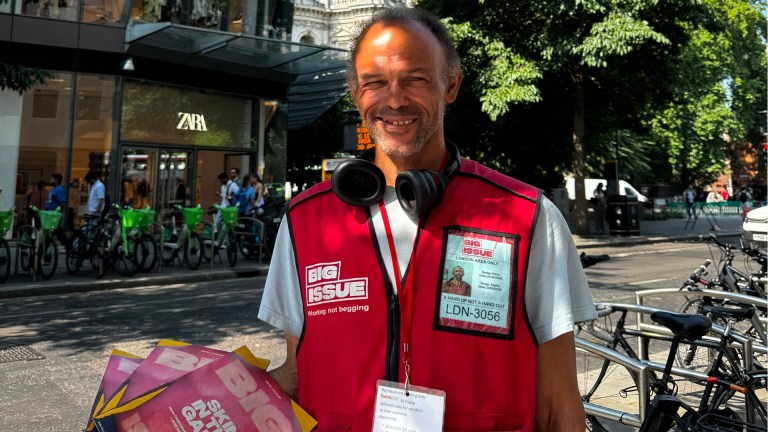
For Brian Edgeworth, food is “the biggest cost”. The 57-year-old Londoner needs to eat healthily to manage his diabetes, but can’t always afford it.
“I have to try and be more careful what types of food I eat, to keep to the sugar levels reasonable,” he told Big Issue. “But it’s just so difficult afford the right sort of foods that you need to keep going.”
Advertising helps fund Big Issue’s mission to end poverty
“They advise more fruit and vegetables, those sort of things, but that’s not affordable sometimes, especially if you’re shopping at local shops.”
Edgeworth’s daughter is his carer and does most of the cooking. But when she’s working or studying for her apprenticeship, he subsists “mostly on crackers”.
“I just keep the cost down as much as possible.”
The conflict in the Middle East and climate disruption are driving up the cost of food, he added, “pushing lots of people into food poverty”.
When Big Issue last covered the poverty premium in 2022, more than 3.5 million low-income households were estimated to be paying an average of £430 a year extra for essentials. The latest research finds that 95% of low-income households still face a poverty premium, paying an average of £380 a year, but this doesn’t mean it has fallen: the researchers caution that changes in methodology mean the figures aren’t directly comparable.
What is clear is that the poverty premium for shopping at local versions of many supermarkets has more than tripled since 2022, rising from £84 to £261 a year.
Advertising helps fund Big Issue’s mission to end poverty
“Our findings suggest that the poverty premium is primarily caused by structural factors rather than individual choices,” said Sara Davies, an associate professor at the University of Bristol who led the research.
“To reduce or remove the poverty premium will therefore need markets to be designed to give fairer outcomes, rather than relying on behavioural change.”
Energy and insurance costs are another key driver. Paying monthly for car insurance rather than annually costs drivers an average of £71 a year, while living in a highly deprived postcode adds an average of £153 a year to premiums.
Edgeworth normally pays monthly for car insurance and it costs him an extra £60 a year.
“That’s a big chunk of money coming out of what you’ve got,” he said.
More than one in four low-income households (27%) use some form of high-cost credit, paying an average premium of £178 a year. Those using payday loans or subprime personal loans face costs as high as £698 and £805 annually.
Advertising helps fund Big Issue’s mission to end poverty
While poorer households pay £380 more on average, the cost is much higher in some parts of the country. In Leeds Central and Headingley, households face an average poverty premium of £474 a year. In Poplar and Limehouse, the figure rises to £523. You can see how your constituency fares here.
The impact is huge, says Edgeworth.
“We need to get out the message that people on low incomes are really, really struggling. You try and hide it as much as you can from family and friends, but we live desperate lives. It’s sending us to early graves, really.”
Do you have a story to tell or opinions to share about this? Get in touch and tell us more.
Change a vendor’s life.
Buy from your local Big Issue vendor every week – and always take the magazine. It’s how vendors earn with dignity and move forward.
Advertising helps fund Big Issue’s mission to end poverty
You can also support online:
Subscribe to the magazine or support our work with a monthly gift. Your support helps vendors earn, learn and thrive while strengthening our frontline services.
Thank you for standing with Big Issue vendors.