What will the SEND reforms mean for families and their disabled children?
Hundreds of thousands fewer children will get education, health and care plans (EHCPs) as a result of changes to the special education system, but other support will be available as the government announces a sweeping range of reforms
The Department for Education has committed to injecting billions of pounds into the SEND system in England over the next three years, with investment in schools and specialist teachers.
Yet there are concerns some measures amount to “cost-cutting” as hundreds of thousands fewer children will be given education, health and care plans (EHCPs) by 2035.
These legally-binding documents will be reserved for children with the most severe needs, and the government will roll out new individual support plans (ISPs) created by schools in collaboration with parents for other children with additional needs.
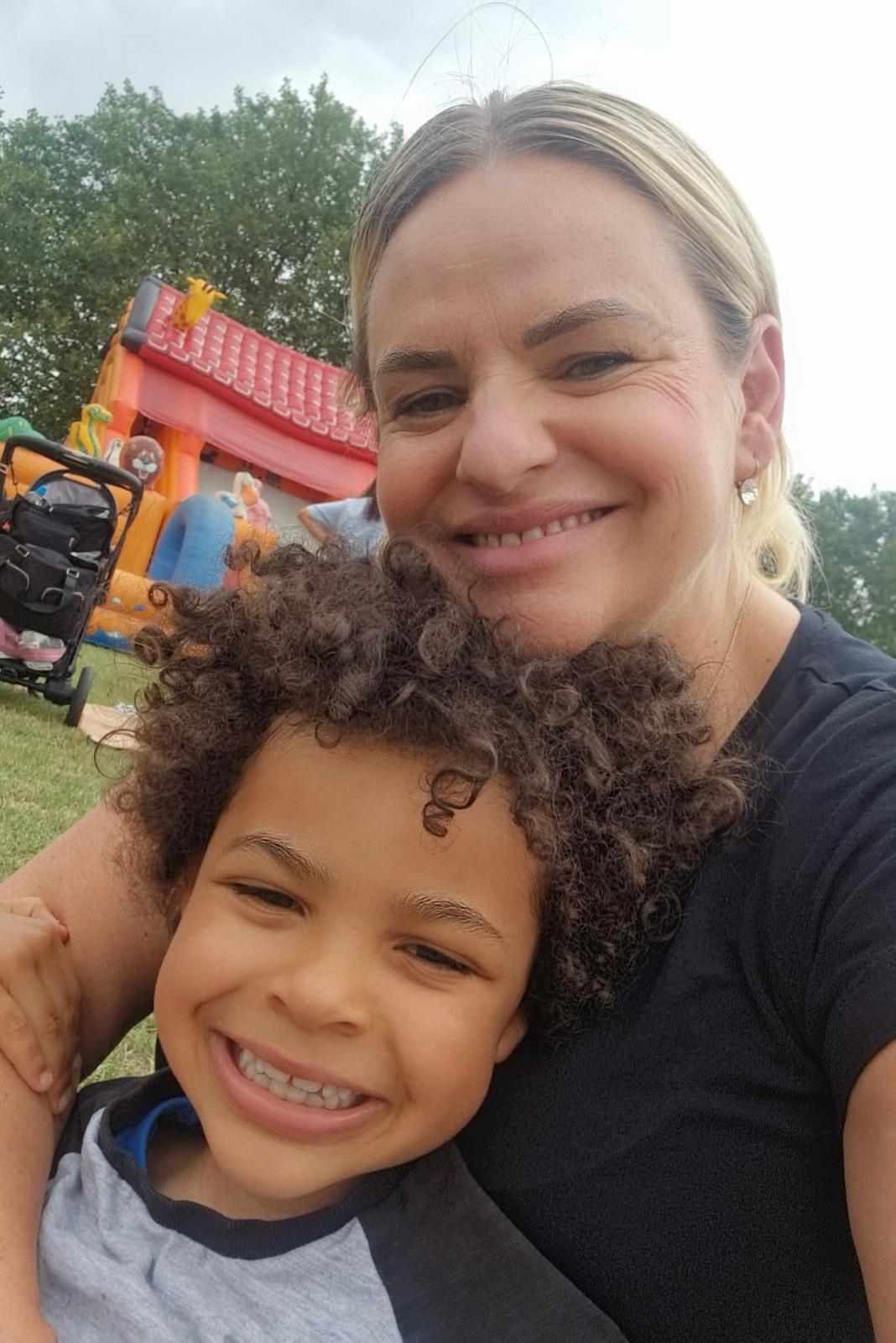
“I’m concerned about the amount of children who could get lost in the system, more than are already getting lost now,” said Cara Roughani, co-founder of SEND Protect and mother of a seven-year-old boy who has autism.
Advertising helps fund Big Issue’s mission to end poverty
Advertising helps fund Big Issue’s mission to end poverty
If her son lost the support set out in his EHCP, Roughani fears she would have “no choice but to take him out of school and homeschool him”. This would limit her ability to work, which would be particularly difficult for her as a single mother.
Cara Roughani and her son Jayden. Image: Supplied
“I want my son to have the best education. I want him to be able to learn to read and write and so that he could potentially work one day, but he might not be able to. If he cannot get into a school with the right provision, once these changes come in or his EHCP is taken away, I will have no option but to homeschool him.”
Around one in five school children – more than 1.7 million – receive support for special educational needs in England. This is an increase of 93,700 since 2024.
Government spending on the SEND system has increased too. It is expected to more than double in real terms between 2015 and 2028, according to the Institute for Fiscal Studies (IFS).
The Office for Budget Responsibility (OBR) forecast a £6 billion gap between expected funding and spending on SEND in 2028, suggesting an urgent need for a cash injection from the government.
Ministers have now announced a £4bn investment which it claims will “make every school truly inclusive and transform outcomes for children with special educational needs and disabilities”.
Advertising helps fund Big Issue’s mission to end poverty
This came as part of the government’s long-awaited schools white paper, which was published on Monday (23 February). It sets out plans for reform across the education system but its SEND plans have received particular focus because of the scale of the challenges.
Big Issue has published a series of articles around the SEND system ahead of the publication of the white paper, speaking with families across the country who have felt failed by the government, local authorities and schools.
Long waiting times, inconsistent decisions and costly processes were repeatedly cited.
Families said their disabled children have experienced “trauma” at the hands of the SEND system. Some had gone months – even years – without access to education because of a lack of provision.
Disturbingly, Big Issue heard from parents with children as young as four who are causing themselves harm because they are so distressed in nursery and school.
A spokesperson for the Department for Education called these cases “heartbreaking”.
Advertising helps fund Big Issue’s mission to end poverty
Families expressed particular concerns around the government’s plans for EHCPs. These are legally-binding documents which set out the support that a child should receive from the local authority and their education setting.
It is a flawed process as it stands. An EHCP is only meant to take 20 weeks to be completed by law, but government data shows that fewer than half of new plans were issued within this timeframe in 2025. Some of the families who spoke to the Big Issue said they waited months.
Roughani said it was a “never-ending fight” to get support for her son, “and it is just so tiring”. Both she and her son suffered with their mental health in the process.
Once children are awarded their EHCP, they do not always receive the support to which they are legally entitled. Families accused local authorities and schools of “breaking the law” by not delivering on this.
Still, they expressed the importance of having an EHCP – or similar legally-binding plan – to be able to hold the authorities and education system accountable for delivering support to their children.
In its white paper, the government announced that by 2035, EHCPs will only be offered to children with the most complex special educational needs. Children will be reassessed for EHCPs as they move to their next stage of education from 2029, meaning they could be at risk of losing them.
Advertising helps fund Big Issue’s mission to end poverty
The government will instead invest in equipping schools to create individual support plans to record additional needs.
For every child receiving targeted or specialist support, schools will be required to develop an individual support plan. This will describe the child’s day-to-day educational provision and the support required and be created collaboratively with parents.
As part of the government funding announced in the white paper, there will be a new Inclusive Mainstream Fund of £1.6bn over three years, provided directly to early years settings, schools and colleges to help children get the support they need, such as through these support plans.
A spokesperson for the Disabled Children’s Partnership said it was a “huge victory” that the government is retaining EHCPs. Previously, the government was rumoured to be considering dropping the plans entirely.
This was a matter which the Big Issue supported 14-year-old Riley Holden, who has cerebral palsy, to press the government on when he interviewed the school standards minister.
However, the spokesperson for the Disabled Children’s Partnership added: “We are deeply concerned about plans to restrict access to EHCPs to ‘most complex needs’, while leaving out which children it considers to have complex needs. Parents and young people up and down the country face months of worry unless the government reassures them that allchildren whose needs cannot or are not met by individual schools’ plans will be able to get an EHCP.”
Advertising helps fund Big Issue’s mission to end poverty
Bethany Bale, policy and campaigns officer at Disability Rights UK, said: “While we welcome the government’s aim to improve school inclusion and increase consistency across the country, we do not trust that these reforms are anything other than a cost-cutting exercise.
“The current issue with the SEND system isn’t the law; it’s a lack of accountability. The government has failed to ensure that current legislation is delivered, so it’s unclear how they plan to ensure new legislation will be. We encourage families to respond to the consultation and be assured that nothing has changed yet; these are proposals, and we will challenge them.”
The Department for Education is also investing £1.8bn over three years to create a bank of specialists – such as SEND teachers and speech and language therapists – in every local area. Schools will be able to draw on these specialists to support children regardless of whether they have an EHCP.
Prime minister Keir Starmer said: “I’ve heard first hand the struggles and exhaustion faced by too many parents who feel they have to fight the system to get their child the support they need.
“But getting the right support should never be a battle – it should be a given. That means no more ‘one size fits all’ system that only serves children who fit the mould. Instead, families will get tailored support built around their child’s individual needs, available on their doorstep.
“Whatever their background, wherever they live – this government will do right by every child.”
Advertising helps fund Big Issue’s mission to end poverty
SEE Oldham, an independent specialist school in Greater Manchester, “welcomed the renewed focus” on supporting children with additional needs. The school has a small number of pupils, all of whom have social, emotional, or mental health needs, and it is backed by Big Issue Invest.
Headteacher Leo Casey said: “It is encouraging to see sustained attention on an area that has for too long required meaningful reform, and, as a school, we are hopeful that the proposed changes will lead to clearer pathways, stronger accountability, and improved outcomes for our most vulnerable young people.”
“Crucially, these reforms must ensure that children and their families receive the right support at the right time, without unnecessary delay or barriers. For pupils with social, emotional and mental health needs, timely intervention and genuine collaboration with families can be transformative, and it is vital that the system is equipped to respond with both consistency and crucially, compassion.”
The government previously announced further training for teachers and 60,000 new specialist places. It claims it will end the “postcode lottery” of SEND support that many families experience.
Stacey Booth, national officer for GMB Union, said: “Of course this funding is very welcome. But we cannot deliver an inclusive approach if opportunities for training and development only extend to headteachers and teaching staff. Support staff play a crucial role in SEND provision and must be included in any skills or workforce strategy.”
Education secretary Bridget Phillipson said the government is “fiercely ambitious for children and young people with SEND” and called the reforms a “watershed moment”.
Advertising helps fund Big Issue’s mission to end poverty
“Children with SEND deserve a system that lifts them up, and that puts no limit on what they can go on to achieve,” she said. “That means brilliant teachers and experts providing support where children need it, when they need it – in their local school, without families having to fight.”
Buy from your local Big Issue vendor every week – and always take the magazine. It’s how vendors earn with dignity and how we fund our work to end poverty.