The arts are often treated as an afterthought in education, something nice to have, something optional, something that can be trimmed away when budgets tighten. But what if the arts aren’t an add-on at all? What if they are the missing piece, especially for those with the least access?
That question sat at the heart of a year-long creative curriculum project delivered by Inspiring Futures, Barking and Dagenham’s cultural education partnership. Backed by Arts Council England as one of only eight national research pilots, the project set out to test something deceptively simple: can drama, sensory arts and creative practice genuinely transform learning for young people with special educational needs and difficulties (SEND)? The answer was yes, but only if we expand, experiment and evolve. We need a curriculum built around real children, not assumptions.
The project began with a clear finding that arts education is often underdeveloped in the SEND curriculum due to a lack of teacher confidence, as well a lack of focus on the value of the creative journey for SEND young people. This wasn’t about reluctance, it was about teachers working under intense pressure, doing their best with limited time, space and resources.
Three East London schools joined the project to investigate how to meaningfully adapt arts education for SEND environments. Prior to involvement, each school had made thoughtful choices to support their pupils: one kept classrooms intentionally bare to avoid sensory overload; another paused drama because it felt too unpredictable for their cohort; a third was navigating a rapidly growing SEND population. What united them was not what they lacked, but their willingness to try to bring arts to some of our most vulnerable children.
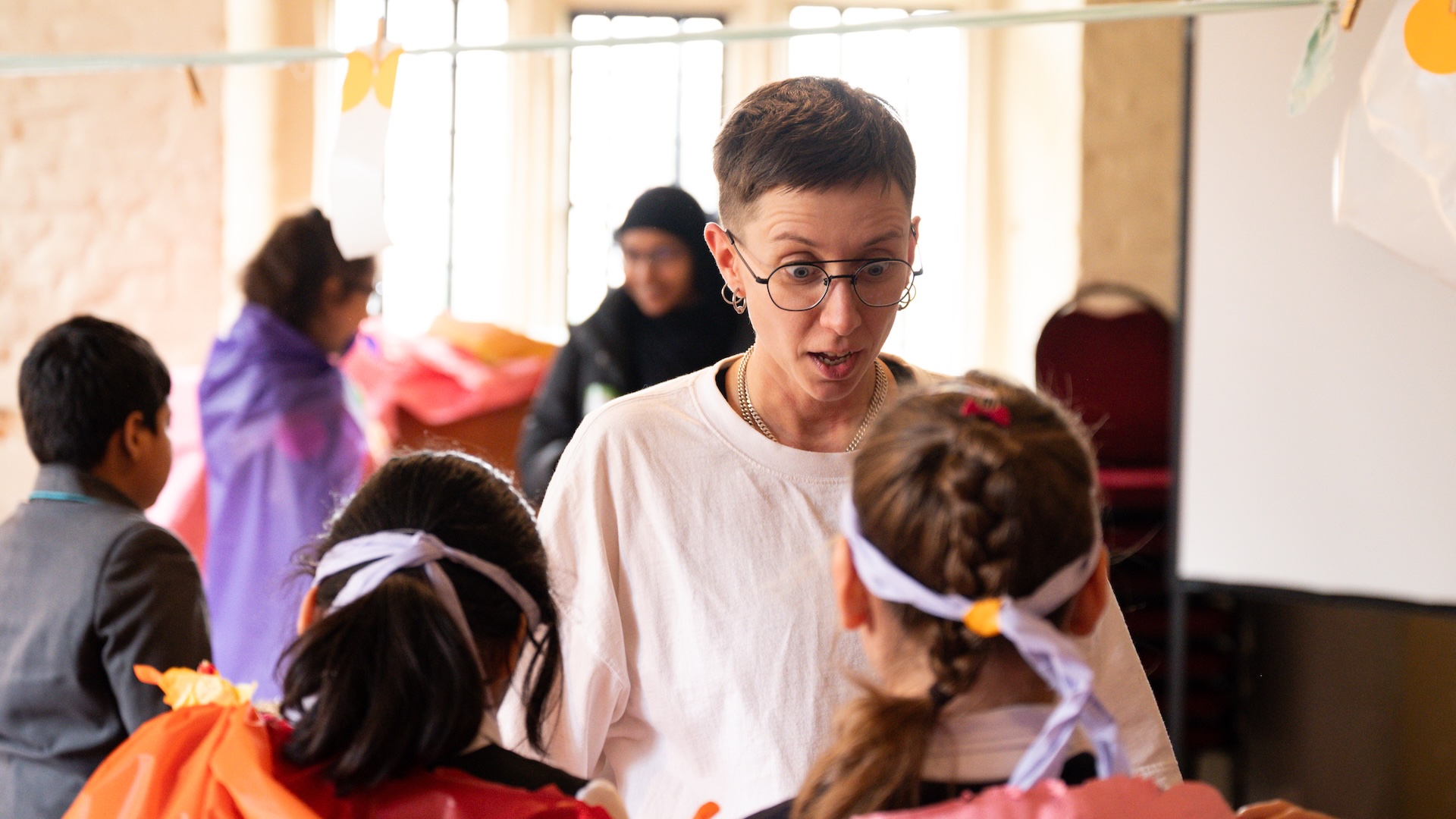
To begin the project, two local artists, Kate Hopewell and Gail Egbeson, were placed in residence for two days a week. They shadowed teachers, observed routines, and built trust before co-designing a creative curriculum that blended teachers’ SEND expertise with artists’ craft. Slowly, things began to shift.
The early weeks were gentle. One child refused to touch glue. Another avoided creative activities entirely.