Advertising helps fund Big Issue’s mission to end poverty
Opinion

Our appearance on BBC Radio 4's The Reunion reaffirms why Big Issue exists

Against all the odds, we are still here. It was great to see some old faces, and remind ourselves of why we started in the first place

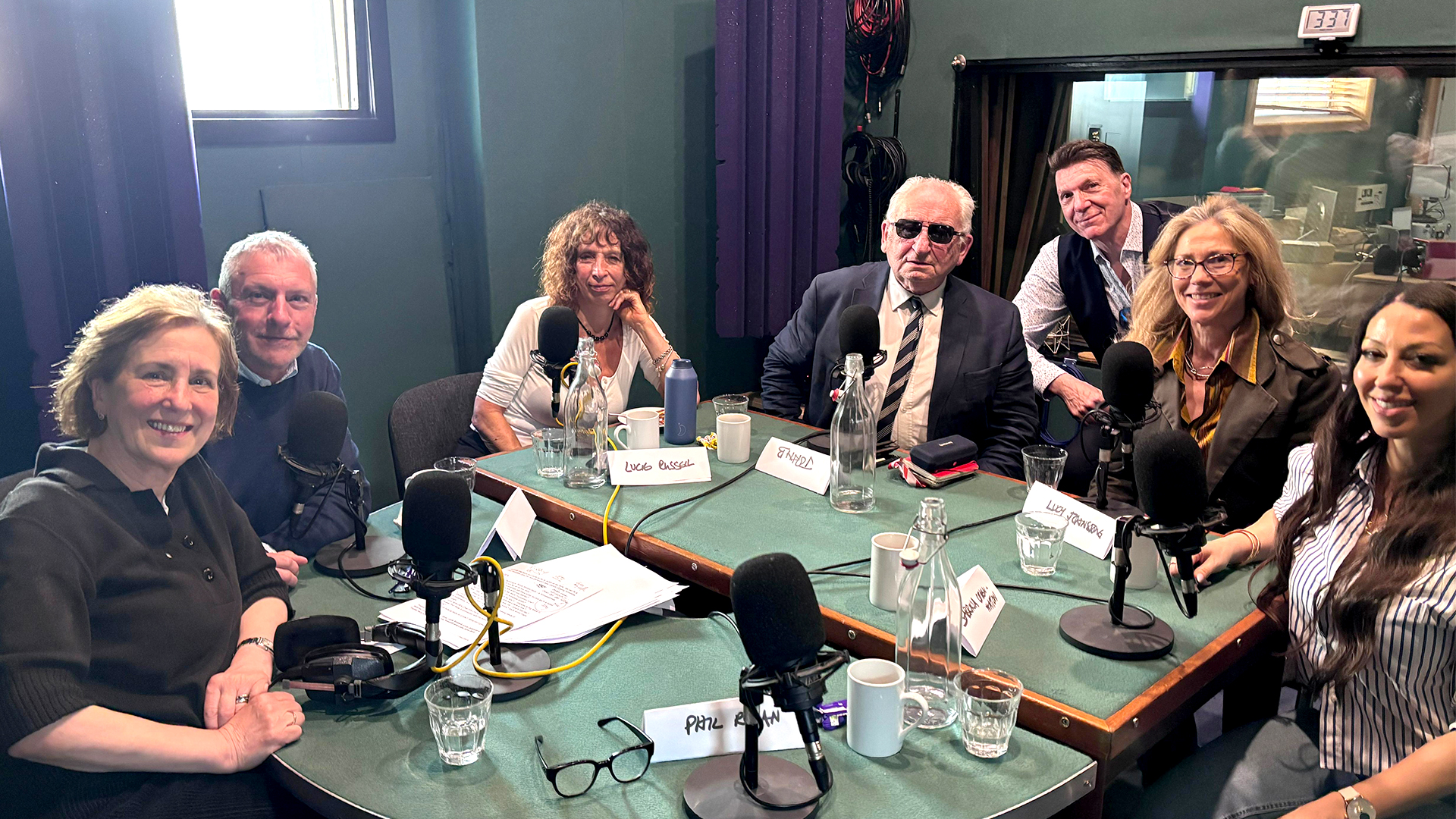
(From left) Kirsty Wark, Peter Bird, Lucie Russell, John Bird, Phil Ryan, Lucy Johnston and Sabrina Cohen-Hatton recording The Reunion

Last week Lucy Johnston, Lucie Russell, Sabrina Cohen-Hatton, Sophie Raworth, Pete Bird, Phil Ryan and I gathered in a small BBC studio in London’s West End and, over teas and water, relived the early and chaotic foundation days of Big Issue. Kirsty Wark nursed us through the tumult of those early times by questioning us as to the unlikely chance of a bunch of bumbling amateurs producing something sustainable.  

But here we are 35 years later, not only launched and giddily established but spread to every continent, except the ice-packed ones. And going through probably the third of our recurring reinventions. Taking the model of a New York street paper in 1991 and blessed into existence by Sir Gordon Roddick of The Body Shop, it became an essential part of street life. 

Listen to BBC Radio 4’s The Reunion here

Thousands upon thousands of homeless people have passed through Big Issue to sell it, and hundreds have dedicated themselves to writing for it, designing it, getting it printed and distributing it. Hundreds of missing people have been found through its missing persons pages, thousands of articles have entertained and informed – and at times sickened – the public with stories of neglect and state indifference to the plight of the world’s poor.

Starting in the back of a van on the double yellow lines of the West End of London, it has consistently featured in the struggle against poverty ever since, as it endeavoured to give the homeless and the vulnerably accommodated ‘a hand up not a handout’. 

The recording of The Reunion for BBC Radio 4 strongly emphasised the chaos and the lack of professionalism that caused such a venture to flower and flourish. As if wishful thinking was our only component. Yet the thousands of homeless people sleeping rough in the West End alone were the driving force; the motor that pushed us on – together with the public’s enormous appetite for this new flash addition to the streets of London. 

Homeless people were brought into the urban equation. Up until then thousands were beggars, with most of the public intimidated by their presence on the streets. By turning them into people earning their income it transformed homeless people into being more approachable. And the public were the most committed part of the story. 

Advertising helps fund Big Issue’s mission to end poverty

Read more:

Contradictorily, 12 years of Thatcherism had laid the foundations of Big Issue’s success. The Conservative governments from 1979 to 1991 had been the most profoundly radical in real terms since the Second World War. Radical in the sense that they tore up a cosy relationship between left and right. What you might call a period of social kindness that existed was summarily ended.

Previously Labour and Conservative accepted the idea of full employment, social housing, universal health care and the government being the largest employer in many parts of the UK. 

But rumblings of disdain at what looked like a pathetic social compromise had begun in the Conservative Party, and even in the Labour Party. The UK was one big industrial and social compromise that was ill-prepared for the next stage of capitalist development. This would eventually bring in vast new businesses through globalisation, and the exportation of jobs and manufacturing to the Far East. 

Between 1980 and 1990, the Tories knocked the bollocks out of the state-subsidised basic industries. Thatcher, as the daughter of a grocer, learned the lessons of efficiency at her father’s knee in the Hungry Thirties, and once in government gathered a phalanx of like-minded ‘anti-wet Tories’ around her. Tories lacking a belief in continuing the compromise that kept millions of people in work not because their workplace was profitable, but because they were kept afloat by the taxpayer. The ‘lame ducks’ had to go. 

We would become a socially mobile service economy. The class system was going to be shaken up. The lower-middle-class grammar schoolgirl Thatcher was going to open the sluice gates to social mobility. But an upward mobility for some was accompanied by a new social mobility downwards into social security as hundreds of thousands of miners, steelworkers, car workers and shipbuilders – nearly all trade unionists – were sacked. Unions were crushed, workers and their families individualised into listless and lost unemployed ex-workers.

Advertising helps fund Big Issue’s mission to end poverty

The ex-working class came into being and, in some form or other, haunt the country still. Vast opportunities opened up for some as casualties multiplied, with manual and skilled labour in the nationalised industries facing a redundancy of purpose and being. 

The UK became a modern, troubled, prosperous, semi-prosperous and unprosperous place to do business. 

And to add insult to injury, the streets filled with the mentally ill, emptied from the psychiatric institutions closed down as a part of general cost saving. Now joining the ill on the streets were children and young people from the former industrial heartlands of the UK. 

The traumas of those gone years live on among us. The unresolved problems of homelessness and poverty, many of them not solved by a consumer-led economy with vast wealth surrounded by vast poverty, are yet to be faced by government. Big Issue will be telling that story, and rallying us all to bring positive change to a nation that has had too much of the wrong kind of change. 

And don’t forget to take the paper so that we can continue to tell the story and support the vulnerable.

Listen to The Reunion here

Advertising helps fund Big Issue’s mission to end poverty

John Bird is the founder and editor-in-chief of the Big Issue. Read more of his words from our archive.

Do you have a story to tell or opinions to share about this? Get in touch and tell us more

Change a vendor’s life.

Buy from your local Big Issue vendor every week – and always take the magazine. It’s how vendors earn with dignity and move forward.

You can also support online:
Subscribe to the magazine or support our work with a monthly gift. Your support helps vendors earn, learn and thrive while strengthening our frontline services.

Thank you for standing with Big Issue vendors.

Advertising helps fund Big Issue’s mission to end poverty

Do you know how Big Issue 'really' works?

Watch this simple explanation.

Recommended for you

View all
Furniture poverty can mean the real difficulties start when homeless people move into a new home
someone taking washed clothes out of a washing machine
Joe Carpenter

Furniture poverty can mean the real difficulties start when homeless people move into a new home

As David Attenborough turns 100, we celebrate his legacy and all he represents
Big Issue 1716 David Attenborough cover
Steven MacKenzie

As David Attenborough turns 100, we celebrate his legacy and all he represents

In The Other Bennet Sister, Mary turns out to be a misunderstood work of art
TV

In The Other Bennet Sister, Mary turns out to be a misunderstood work of art

Renters like Natasha will no longer be scared of complaining about damp in case they're evicted
Generation Rent chief executive Ben Twomey
Section 21

Renters like Natasha will no longer be scared of complaining about damp in case they're evicted