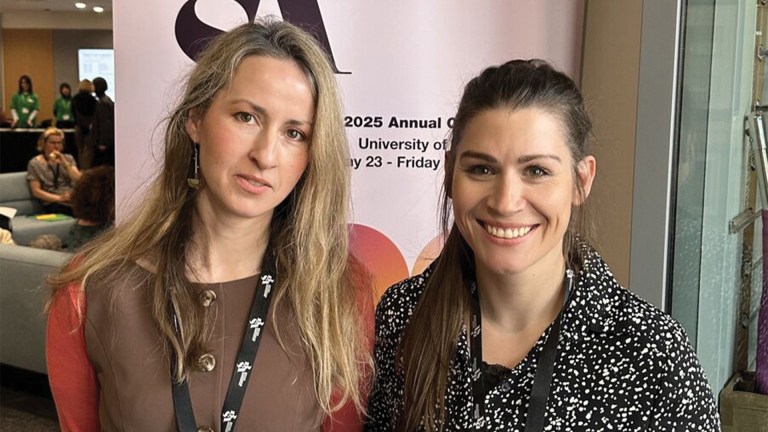
Born in Eritrea, Helen fled with her mother to Ethiopia after her father refused to fight in the army and her family were threatened with imprisonment. In Ethiopia, Helen was forced into domestic servitude, forcibly married at the age of 14 and imprisoned for being Eritrean.
After her release, she fled through Sudan and Libya, where she was trafficked and subjected to further violence. She later experienced destitution in France, where she was unaware of her right to claim asylum and had no access to support or protection.
Read more:
Keep reading the journalism that powers our mission
Register free to continue and learn more about the stories, campaigns and the support we provide, helping people facing poverty across the UK.
Believing the UK would be safe, Helen, then in her mid-20s, crossed the Channel by boat in spring 2026 but was immediately detained under the UK-France returns agreement.
“I don’t understand why this happened to me,” Helen told Big Issue of her detention. “It was so scary being in detention and so scary being homeless. After everything I’d been through, I thought I was finally safe, but I was wrong.”
With support from the charity Women for Refugee Women, Helen was recognised as a survivor of trafficking through the National Referral Mechanism and released from detention. She was subsequently granted refugee protection and hoped to build a new life in the UK, including pursuing her ambition of becoming a nurse.
But under the government’s new settlement framework, Helen could face decades before securing the permanent status she needs to rebuild her life with long-term security, simply because she had no choice but to reach safety in the UK by boat.
The detailed immigration rule changes have yet to be implemented, with the government intending to introduce them during 2027.
“Sometimes my life doesn’t feel real,” Helen said. “The things I have been through are from a nightmare.”
Muggleton-Arnold, who has supported Helen since her detention, said it was “devastating” that Helen and so many other women in the same position now face the prospect of decades of insecurity.
“We have spoken to countless women and received many calls and texts from women who are anxious and confused about the future and what these changes mean for them,” Muggleton-Arnold said. “After years of uncertainty in the gruelling asylum system, they finally receive refugee status and the certainty this protection brings, to be suddenly told the goalposts have moved overnight and that stability is years away.”
Muggleton-Arnold said Helen’s case highlights the “fundamental problem and cruelty of these proposals”.
“The government has accepted that she needs protection and cannot safely return to her country,” she said. “Yet instead of providing security, the system will keep her in a prolonged period of uncertainty – simply because of the dangerous journey she was forced to take to safety. The question should not be whether women like Helen have ‘earned’ their settlement. The UK government has already recognised that she needs protection. The focus instead should be on helping her to rebuild her life and heal.”
Without settlement, refugee women like Helen face years of insecurity, uncertainty and anxiety. Prolonged periods without permanent status can make it harder for women to pursue education and employment, secure stable housing, reunite with loved ones and recover from trauma.
Muggleton-Arnold warned that the proposals could expose refugee women to further harm, including: deteriorating mental health caused by prolonged insecurity and fear about the future and greater vulnerability to exploitation, including abusive relationships and exploitative working conditions.
The proposals could also impact housing insecurity and poverty, introduce barriers to family reunion and maintaining family stability and worsen ongoing trauma and additional barriers to recovery.
Women are particularly likely to be disadvantaged by a settlement system that places greater emphasis on employment and economic contribution. Many refugee women have experienced disrupted education, domestic servitude, trafficking, caring responsibilities and prolonged periods of trauma. These experiences can make it harder to enter employment, achieve financial independence and meet the criteria needed to secure permanent status.
“The earned settlement proposals risk entrenching gender inequality by making it harder for women to meet the criteria required to secure permanent status,” Muggleton-Arnold said.
She described how international evidence demonstrates the potential consequences of this approach. Following similar changes in Denmark in 2015, the number of women granted permanent residence almost halved by 2021, with particularly damaging impacts on mothers and survivors of gender-based violence.
For a government that has stated its commitment to tackling violence against women and girls, Muggleton-Arnold said, “these changes are not only short-sighted, but they are cruel”.
“We reject the earned settlement proposals in their entirety and call for them to be scrapped,” she said.
Alongside opposing the settlement reforms, Women for Refugee Women is calling on the government to urgently reinstate the refugee family reunion, following the suspension of the route in September 2025.
The suspension means that refugees can no longer make new applications through the dedicated family reunion route to bring their partners and children to the UK. Families must instead explore alternative, often more expensive and restrictive, immigration routes.
The impact is particularly significant for refugee women and children. Before its suspension, more than 92% of grants through the family reunion route were given to women and children, demonstrating how important this safe route was for families escaping conflict, persecution and violence.
For women who have fled abuse and trafficking, the inability to reunite with children and other close family members can prolong separation, increase emotional distress and make rebuilding a safe and stable life even harder.
If the government does not heed Muggleton-Arnold’s warning and scrap the proposed changes, “it risks creating unnecessary hardship for women who have already survived so much”.
“The changes are an attack on the right for refugees to rebuild their lives in safety,” she concluded. “They send the cruel message that people who have been granted protection here are not welcome. It is unfathomable that the government believes telling someone who was forced to take a dangerous journey to save their life that they will now be punished with 10 extra years of insecurity and uncertainty. It begs the question as to where the humanity has gone?”
Home secretary Shabana Mahmood said the earned settlement reforms “create a migration system that is fair: fair to those who come here and play their part, and fair to British citizens already here, who must not be asked to bear a greater burden”.
Do you have a story to tell or opinions to share about this? Get in touch and tell us more.
Change a vendor’s life.
Buy from your local Big Issue vendor every week – and always take the magazine. It’s how vendors earn with dignity and move forward.
You can also support online:
Subscribe to the magazine or support our work with a monthly gift. Your support helps vendors earn, learn and thrive while strengthening our frontline services.
Thank you for standing with Big Issue vendors.