Advertising helps fund Big Issue’s mission to end poverty
Opinion

Pink Ladies: How an anti-migrant movement is hiding behind women's rights protests

Ending violence against women and girls should be a legitimate goal in itself rather than treated as a political football

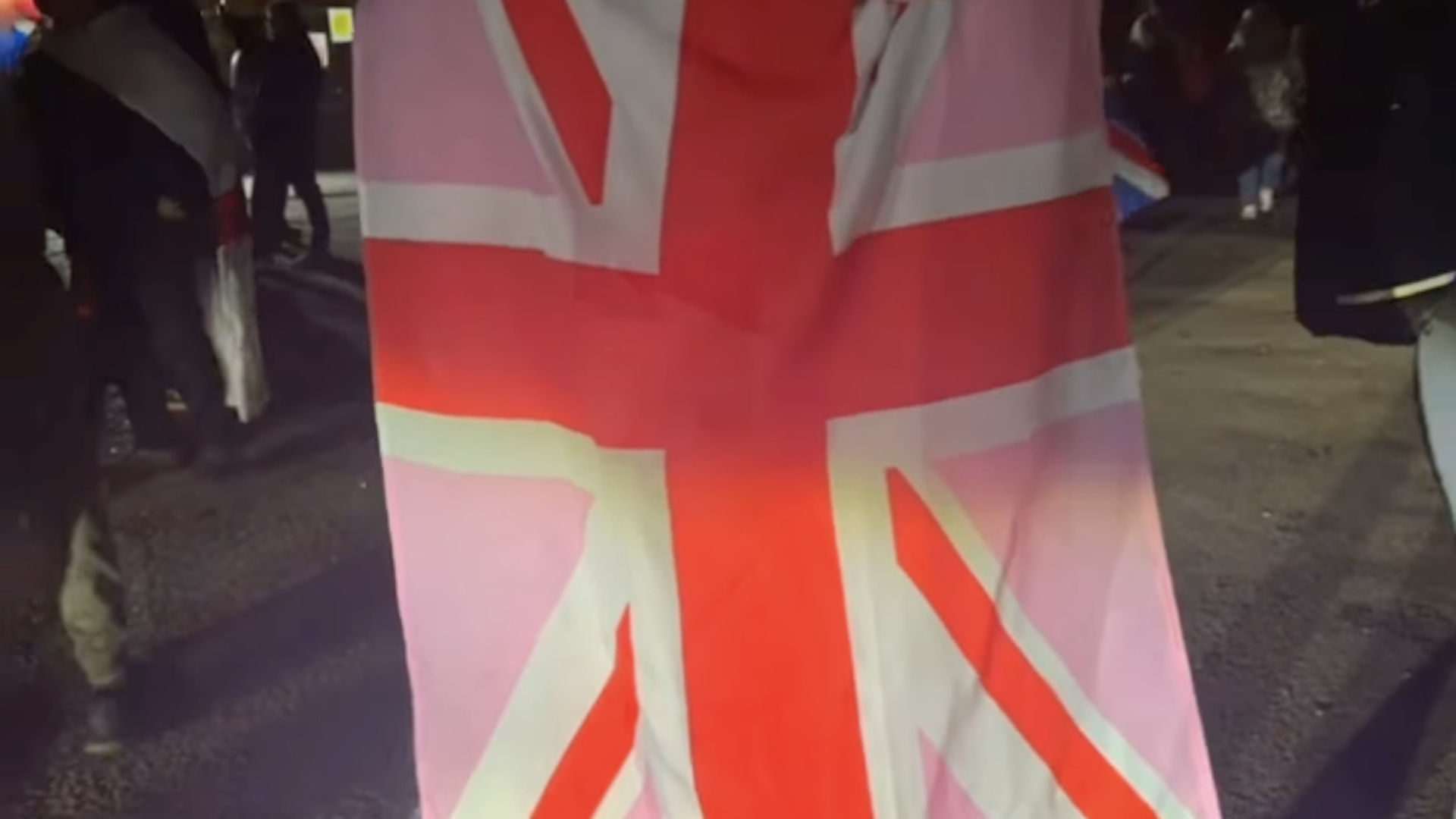
Pink Ladies flag

The pink flag used by the Pink Ladies protest group. Image: Facebook reels/ Pink-Ladies UK-Official

In early April, a report of a gang rape in Epsom spread rapidly across social media and into public discourse. A young woman was attacked by several men after leaving a nightclub. Within hours, the story had taken on a life of its own — it circulated widely across online community groups and fuelled public outrage. Before any details were confirmed, speculation around the ethnicities of the alleged perpetrators intensified, and demands were made for ‘information’ to be shared with the public.

Days later, protests erupted. Footage showed chaotic scenes on the high street, including clashes with police. Residents spoke to reporters about their fears and frustrations with what they perceived to be inadequate responses from police to protect women and girls.

The police later confirmed there was no evidence that the incident “had occurred as reported” and no evidence linking migrant or asylum seeking people to the allegation. By the time this information had been established, the damage had already been done. This is a clear example of the continued misinformation and weaponisation of violence against women and girls (VAWG) to advance political narratives that position migrant men as perpetrators.

Read more:

This is not an isolated case, but part of a wider pattern. As organisations who have dedicated our working lives to uplifting women and eradicating VAWG, this weaponisation is something we’re determined to address – but we can’t do it alone. It requires a response across politics, the press, and members of the public in everyday conversations to challenge how VAWG is being misrepresented.

As these demonstrations, including the upcoming ‘Pink Ladies Protests’ and ‘Unite the Kingdom’ rallies gather momentum, it is clear that public fear has not emerged in a vacuum. It is shaped and distorted by misinformation and far-right actors exploiting national tragedies. Suspicion towards migrant communities is not new, but is increasingly reinforced through selective public discourse — such as the Epping Forest asylum hotel case, and ongoing debates around grooming gangs’ ethnicity and “false” LGBTQI+ asylum and domestic abuse claims. Together, these narratives create a climate in which migrant people are subjected to heightened scrutiny, blame and villainisation.

Advertising helps fund Big Issue’s mission to end poverty

Violence is committed predominantly by men known to the women they harm. Reinforcing the “stranger-danger” myth harms our communities; it does not reflect the reality of VAWG and deters victims and survivors from coming forward. Scapegoating does not make women safer, it distracts us from the real causes of violence and the ability to deliver real solutions, including funding specialist support for victims and survivors, ensuring they can access justice, and engaging in prevention work.

The normalisation of migrant communities being cast as inherently violent has increased the risks of them facing condemnation without evidence. For migrant women in particular, who already face significant barriers to reporting abuse, the impact is even more severe. Migrant survivors should be central to the conversation on how we ensure support is readily available for all. However, they are notably absent from these narratives.

Misinformation is not accidental; it is the tool of the far-right to accelerate this cycle. By the time facts are verified, dangerous narratives about migrant communities have already seeped into the public consciousness. It is important to recognise that many people who believe and share misinformation are not just unwitting participants but also victims of it, responding to what they believe to be real threats. Coupled with the erosion of public trust in reporting, this misinformation immediately justifies the proposal and introduction of increasingly punitive immigration policies and political rhetoric that is not grounded in evidence.

Engaging in constructive conversations around VAWG is not simple; it requires nuance and space for complexity and exchange. Scapegoating narratives hinder accountability as they rely on misinformation and deflect blame, shutting down any meaningful or honest dialogues.

As part of the #NotInOurName Campaign, the End Violence Against Women Coalition, Hibiscus, Women for Refugee Women, Southall Black Sisters, Imkaan, Asylum Matters and the Latin American Women’s Rights Service have developed guidance with practical advice on how to engage with this misinformation. The guide provides tools to have productive conversations with people in our lives about VAWG and immigration, and equips readers with resources to unite over shared positive values. In doing so, we can tell a more honest story, helping people to understand the real causes of, and solutions to, gendered violence.

As the May elections approach, these conversations become more pressing. The weaponisation of VAWG cannot go unchallenged. Ending VAWG should be a legitimate goal in itself rather than treated as a political football. Holding candidates to account for whether their proposals are grounded in evidence is key to ensuring we are demanding policies that will end violence instead of fueling it.

We need to shift the narrative to one that is accurate, evidence-based and grounded in lived experience, one that will make space for migrant victims and survivors of VAWG to access support and redress. We cannot allow society, media and politicians to continue blaming migrants for VAWG. If we do, we risk never eradicating it.

Read the guide to talking about the weaponisation of violence against women and girls.

Cat Linton is a policy worker for Hibiscus Initiatives, a charity supporting migrant women and families. Monserrat Escudero is policy and communications manager on VAWG and María Álvarez is a policy and advocacy specialist at the Latin American Women’s Rights Service.

Do you have a story to tell or opinions to share about this? Get in touch and tell us more

Change a vendor’s life.

Buy from your local Big Issue vendor every week – and always take the magazine. It’s how vendors earn with dignity and move forward.

You can also support online:
Subscribe to the magazine or support our work with a monthly gift. Your support helps vendors earn, learn and thrive while strengthening our frontline services.

Thank you for standing with Big Issue vendors.

Advertising helps fund Big Issue’s mission to end poverty

Do you know how Big Issue 'really' works?

Watch this simple explanation.

Recommended for you

View all
I'm a single working mum relying on credit to pay bills. Universal credit isn't enough
Thea Jaffe outside Number 10.
Thea Jaffe

I'm a single working mum relying on credit to pay bills. Universal credit isn't enough

It's no longer a cost of living crisis – it's a cost of surviving crisis
Mike Towers
Mike Towers

It's no longer a cost of living crisis – it's a cost of surviving crisis

What baked beans can tell us about war in the Middle East
Tins of Heinz beans
John Bird

What baked beans can tell us about war in the Middle East

I wrote a play about grief and working class men. Now I want blokes from the pub to come and see it
Playwright Joe Mallalieu with his dog
Joe Mallalieu

I wrote a play about grief and working class men. Now I want blokes from the pub to come and see it